INTRODUCTION OF PREGANACY

Pregnancy is one of the most remarkable and life-changing experiences in a person’s life. It is the process in which a baby develops inside the uterus over approximately 40 weeks, beginning from the first day of the last menstrual period. Pregnancy is divided into three stages, known as trimesters, each with unique developments for both the mother and the growing baby.
For many families, pregnancy is a time of excitement, anticipation, and preparation. At the same time, it brings physical, emotional, and lifestyle changes that require proper care and attention. Understanding pregnancy helps expectant parents make informed decisions, maintain good health, and provide the best possible environment for their developing baby.
This guide covers everything you need to know about pregnancy, including symptoms, stages, fetal development, nutrition, exercise, prenatal care, common complications, labor, delivery, and postpartum recovery.
What Is Pregnancy?
Pregnancy occurs when a sperm fertilizes an egg, forming a fertilized egg called a zygote. The zygote travels through the fallopian tube and implants itself into the lining of the uterus. Once implantation occurs, the embryo begins developing into a fetus.
A full-term pregnancy usually lasts about 40 weeks and is divided into three trimesters.
The main purpose of pregnancy is to allow the baby’s organs, brain, bones, muscles, and other body systems to develop until birth.
Signs and Symptoms of Pregnancy
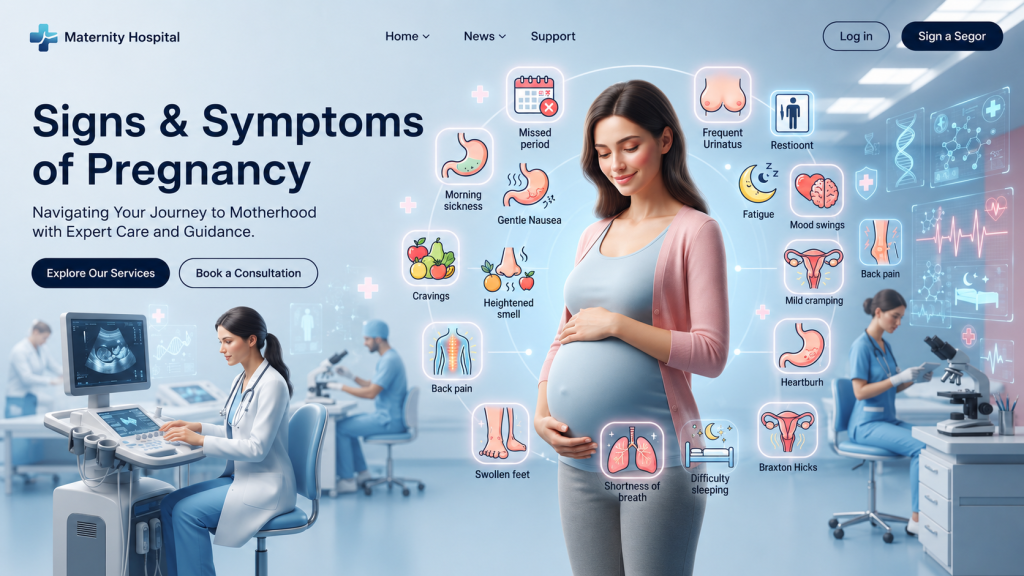
Pregnancy symptoms vary from person to person, but some of the most common early signs include:
- Missed menstrual period
- Morning sickness (nausea and vomiting)
- Breast tenderness and swelling
- Frequent urination
- Fatigue
- Mood swings
- Food cravings or food aversions
- Increased sense of smell
- Mild abdominal cramping
- Light spotting (implantation bleeding)
As pregnancy progresses, additional symptoms may include:
- Back pain
- Leg cramps
- Heartburn
- Constipation
- Swollen feet and ankles
- Shortness of breath
- Difficulty sleeping
- Braxton Hicks contractions
Causes of Pregnancy
Pregnancy begins when:
- Ovulation releases an egg.
- Sperm fertilizes the egg.
- The fertilized egg implants into the uterus.
- Hormones support fetal development throughout pregnancy.
Several hormones play important roles, including:
- Human Chorionic Gonadotropin (hCG)
- Progesterone
- Estrogen
- Relaxin
- Oxytocin
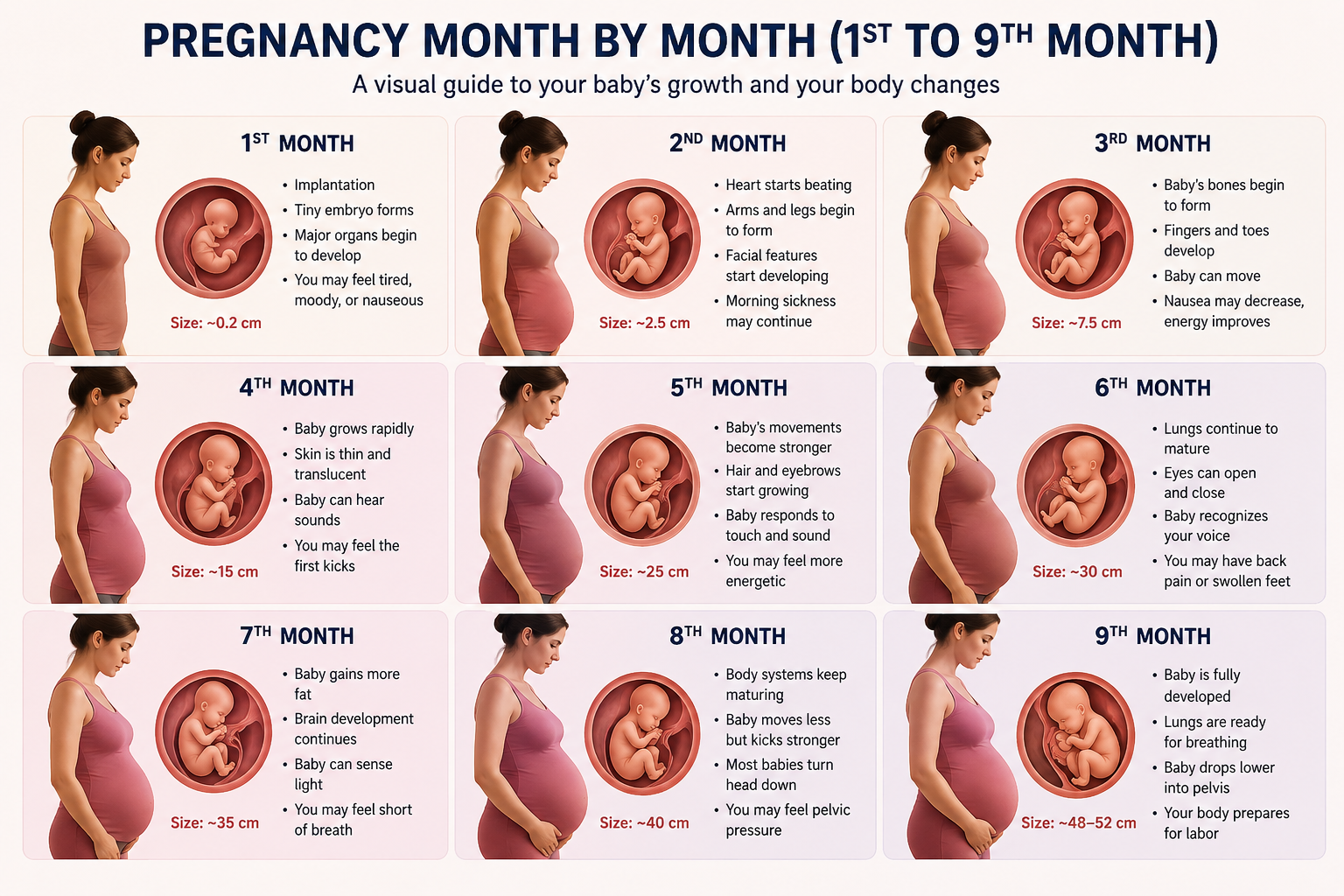
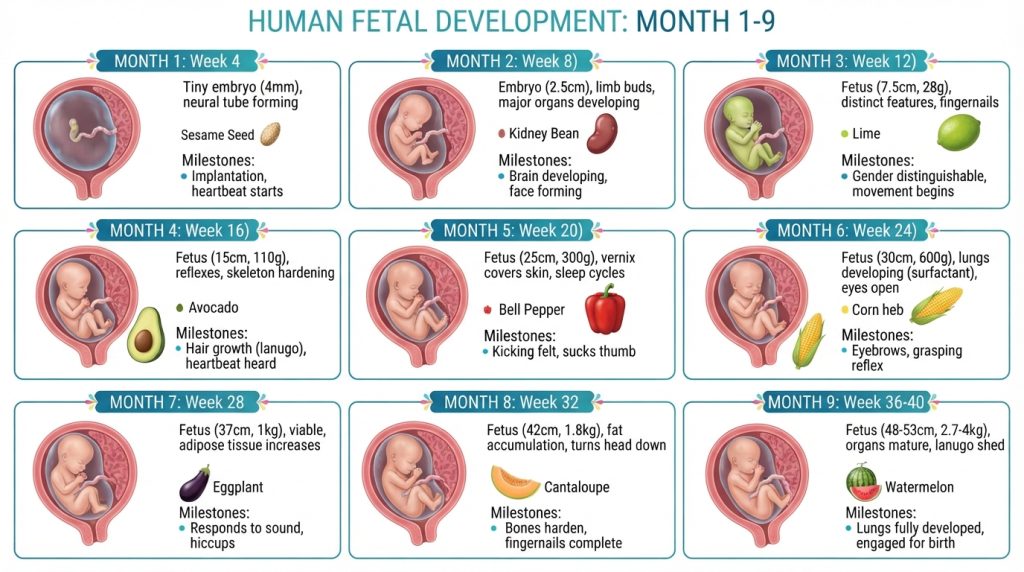
The Three Trimesters of Pregnancy
First Trimester (Weeks 1–12)
The first trimester is critical because all major organs begin forming.
Baby’s Development
During this stage:
- Brain develops rapidly.
- Heart begins beating.
- Eyes and ears start forming.
- Arms and legs appear.
- Fingers and toes develop.
- Internal organs begin functioning.
By week 12:
- Baby measures approximately 5–6 cm.
- Weight is around 14 grams.
- Facial features become more recognizable.
Mother’s Changes
Common experiences include:
- Extreme tiredness
- Morning sickness
- Emotional changes
- Hormonal fluctuations
- Breast enlargement

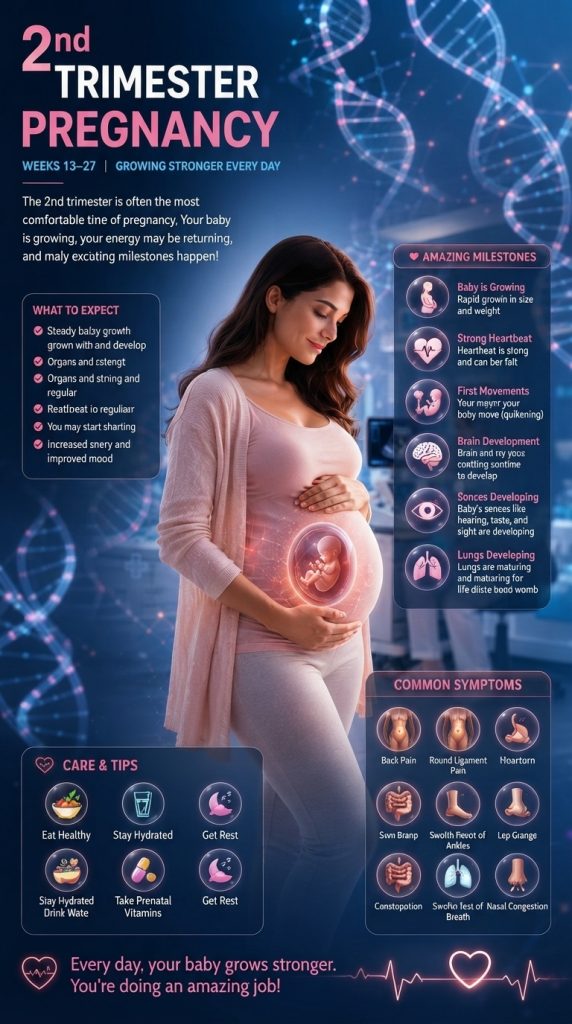
Second Trimester (Weeks 13–27)
This is often considered the most comfortable stage of pregnancy.
Baby’s Development
The baby:
- Begins moving actively.
- Develops fingerprints.
- Starts hearing sounds.
- Opens and closes eyes.
- Develops muscles and bones.
- Skin becomes covered with fine hair called lanugo.
By week 27:
- Baby weighs approximately 900 grams.
- Length reaches about 36 cm.
Mother’s Changes
During this trimester:
- Baby bump becomes visible.
- Energy levels improve.
- Morning sickness usually decreases.
- Appetite increases.
- Baby movements become noticeable.
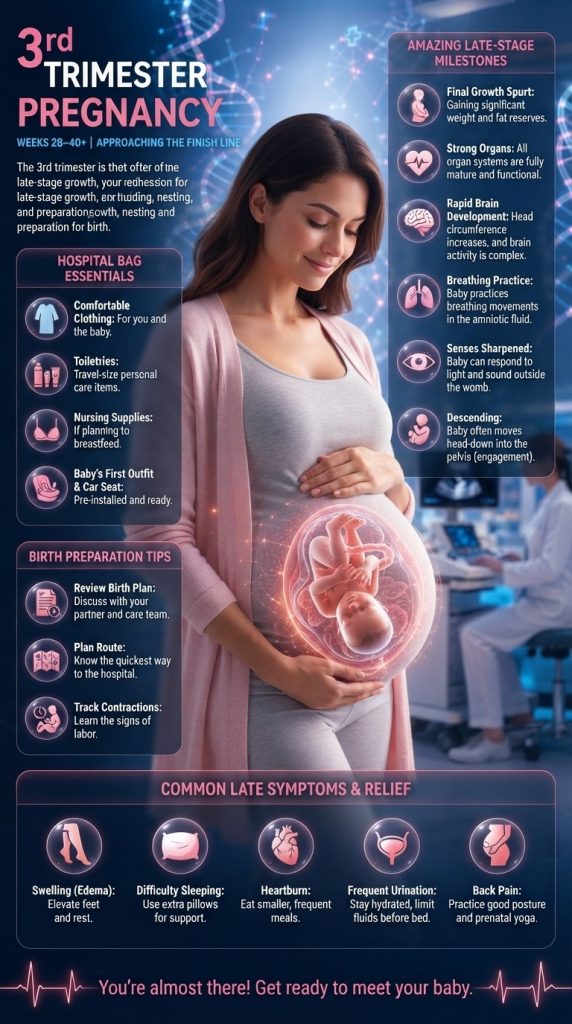
Third Trimester (Weeks 28–40)
This stage prepares both mother and baby for birth.
Baby’s Development
The baby:
- Gains body fat.
- Brain develops rapidly.
- Lungs mature.
- Bones strengthen.
- Eyes respond to light.
- Moves into the head-down position.
By full term:
- Average weight: 2.5–4 kg
- Length: 48–52 cm
Mother’s Changes
Common symptoms include:
- Back pain
- Swollen legs
- Difficulty sleeping
- Frequent urination
- Braxton Hicks contractions
- Shortness of breath
Prenatal Care
Prenatal care refers to regular medical checkups during pregnancy.
Healthcare providers monitor:
- Mother’s blood pressure
- Baby’s heartbeat
- Weight gain
- Blood sugar
- Urine tests
- Ultrasound scans
- Baby’s growth
Regular prenatal visits help detect problems early and improve pregnancy outcomes.
Nutrition During Pregnancy
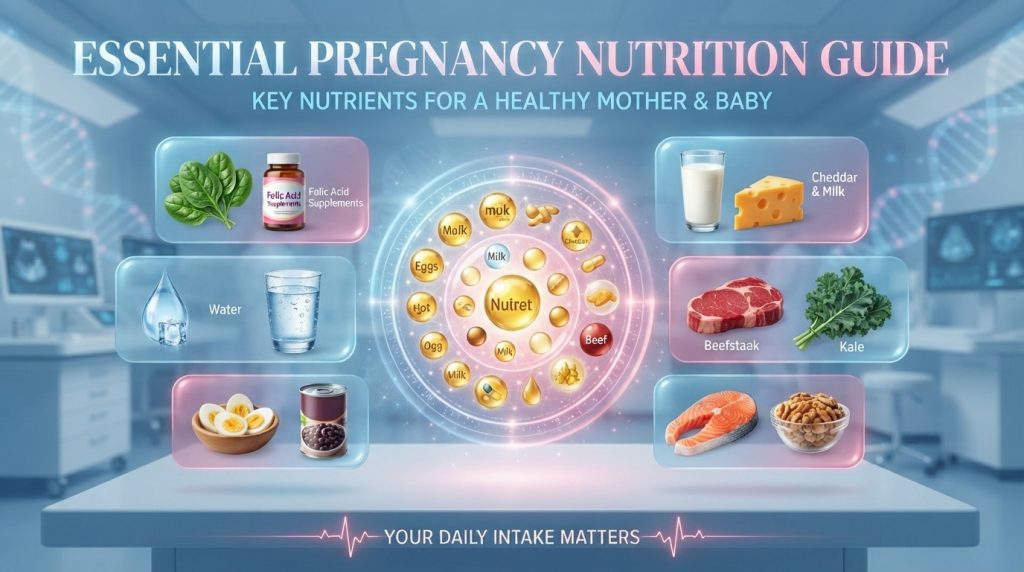
Healthy nutrition supports both mother and baby’s development.
Essential nutrients include:
Folic Acid
Helps prevent neural tube defects.
Sources:
- Spinach
- Broccoli
- Lentils
- Fortified cereals
Iron
Supports healthy red blood cells.
Sources:
- Lean meat
- Beans
- Spinach
- Eggs
Calcium
Essential for baby’s bones and teeth.
Sources:
- Milk
- Yogurt
- Cheese
- Tofu
Protein
Supports tissue growth.
Sources:
- Chicken
- Fish (low-mercury varieties)
- Eggs
- Beans
- Nuts
Omega-3 Fatty Acids
Important for brain development.
Sources:
- Salmon
- Sardines
- Walnuts
- Flaxseeds
Water
Drink plenty of water every day to:
- Prevent dehydration
- Reduce constipation
- Maintain amniotic fluid
- Support circulation
Foods to Avoid During Pregnancy
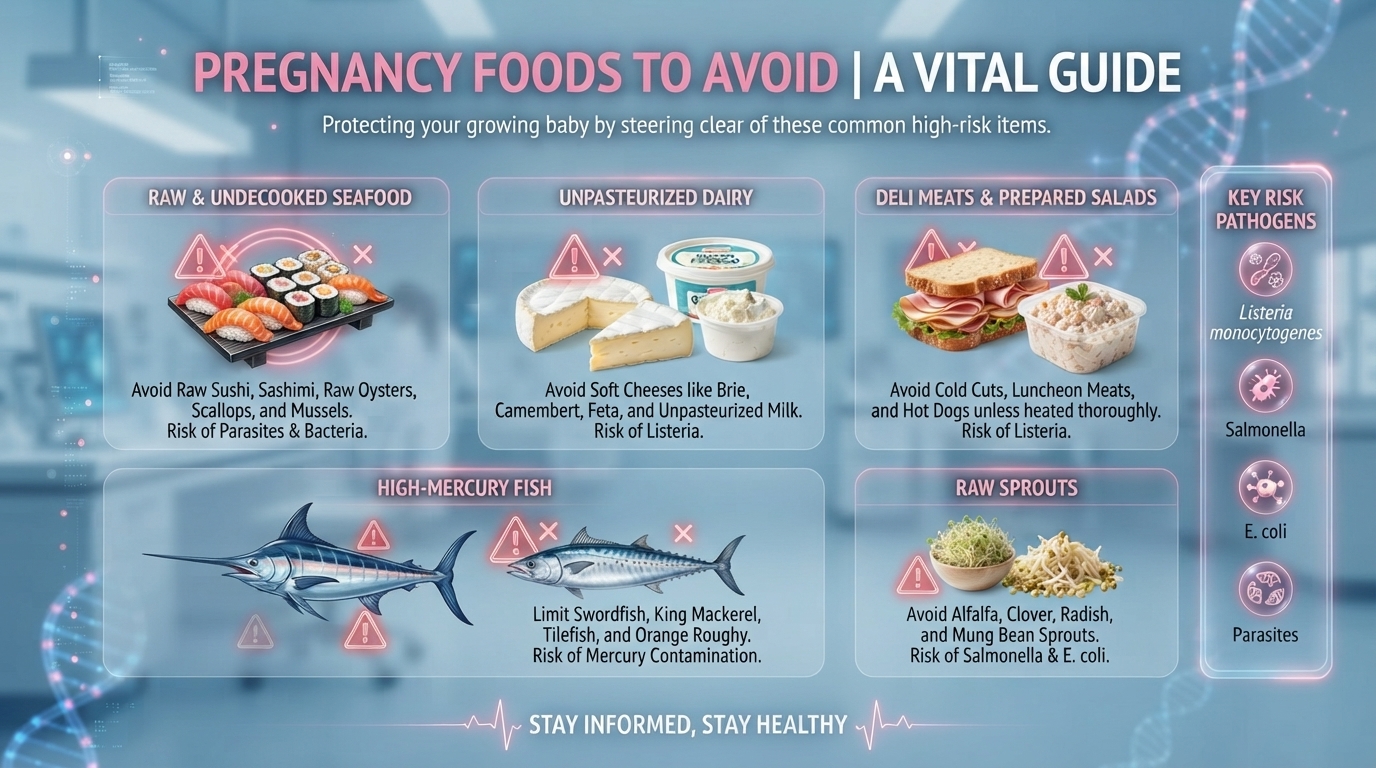
Certain foods may increase the risk of infections or complications.
Avoid:
- Raw seafood
- Undercooked meat
- Unpasteurized milk
- Soft cheeses made from unpasteurized milk
- Raw eggs
- Excess caffeine
- Alcohol
- Smoking
- Recreational drugs
Limit fish high in mercury, such as shark, swordfish, king mackerel, and tilefish.
Exercise During Pregnancy

Regular exercise provides many benefits.
Safe activities include:
- Walking
- Swimming
- Prenatal yoga
- Stretching
- Stationary cycling
- Light strength training
Benefits:
- Better circulation
- Reduced back pain
- Improved sleep
- Healthy weight gain
- Easier labor
- Better mood
Always consult a healthcare provider before starting a new exercise routine.
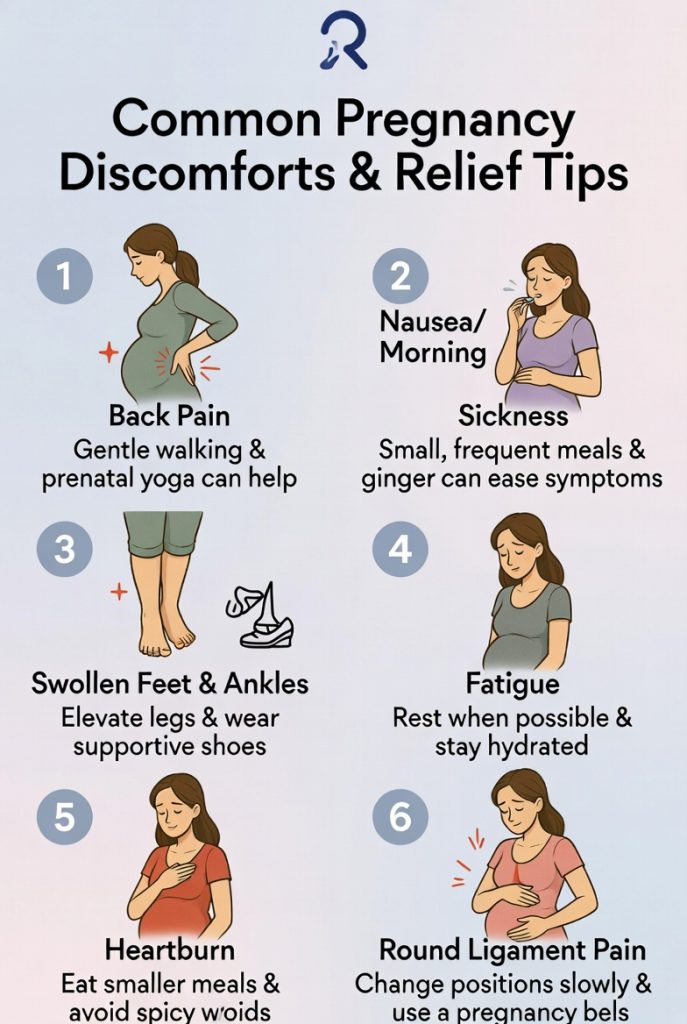
Common Pregnancy Discomforts
Pregnancy can cause several normal discomforts.
These include:
- Morning sickness
- Constipation
- Heartburn
- Leg cramps
- Back pain
- Swollen feet
- Fatigue
- Varicose veins
- Mood changes
Most improve with lifestyle adjustments and medical advice.