

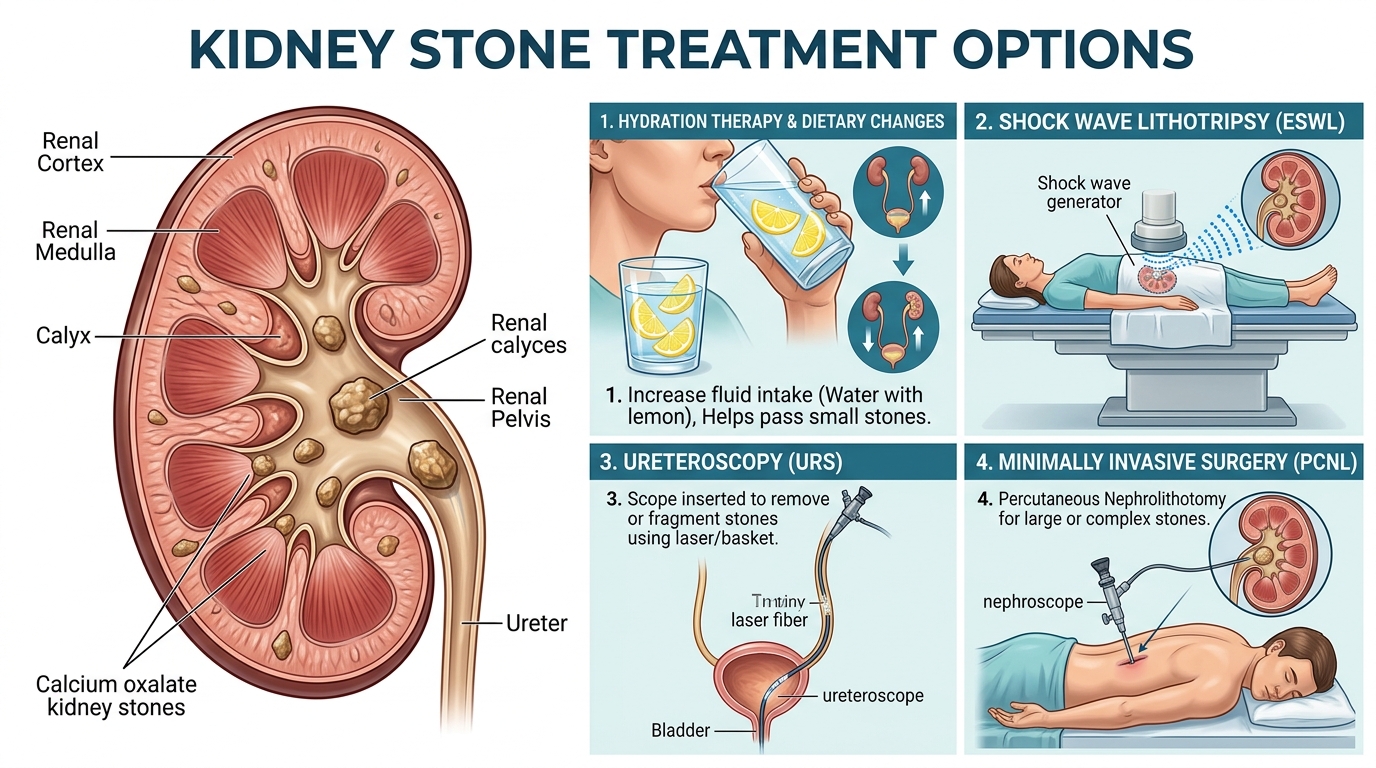
What are Kidney Stones?
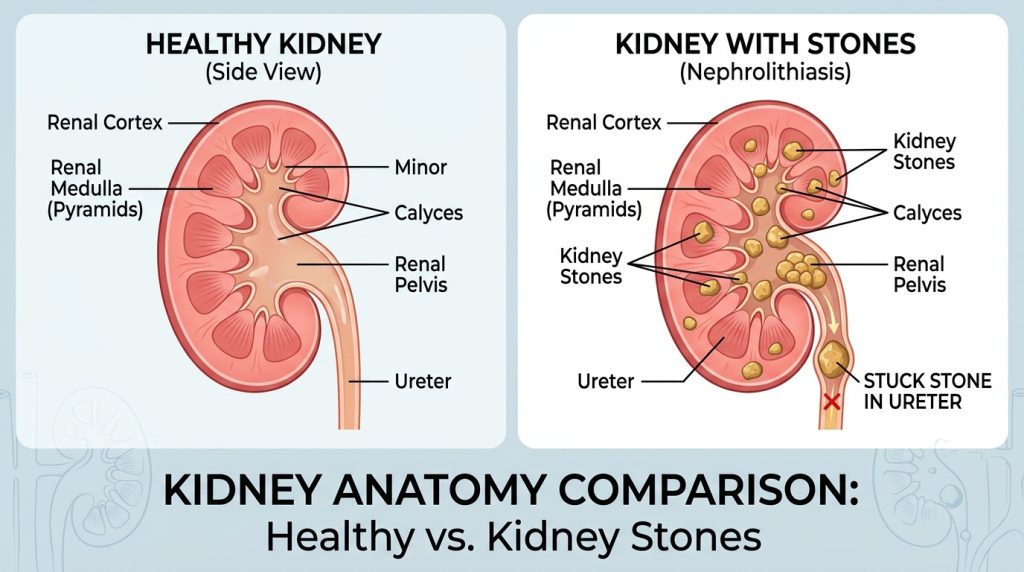
Kidney stones are hard deposits made of minerals and salts that form in the kidneys. They can cause pain when they move through the urinary tract.
Symptoms
Common symptoms of kidney stones include:
- Severe pain in the back, side, or lower abdomen
- Pain or burning while urinating
- Blood in the urine
- Frequent urge to urinate
- Nausea and vomiting
- Cloudy or foul-smelling urine
- Fever and chills (if there is an infection)
Treatment
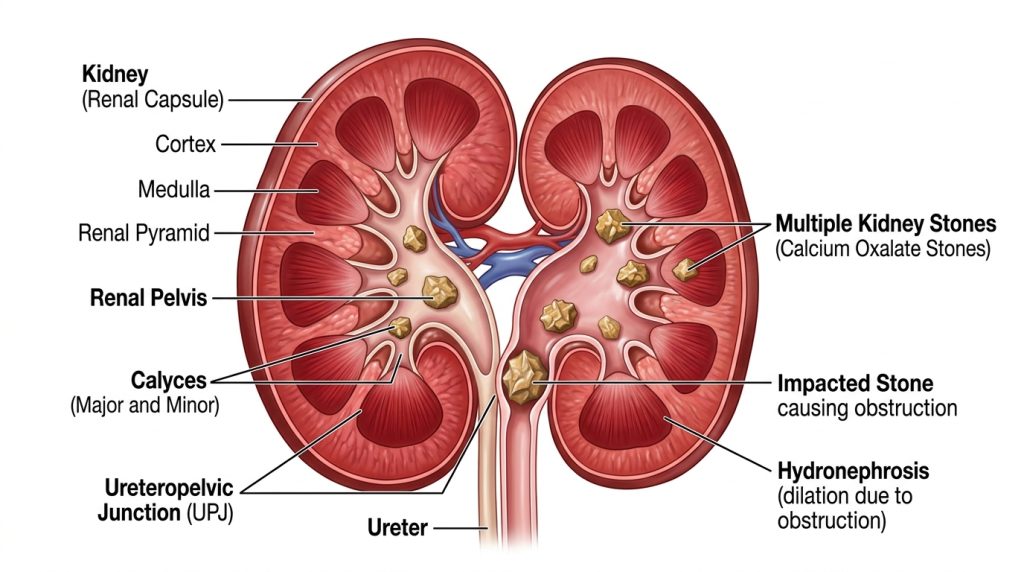
Treatment depends on the size and location of the stone.
1. Drink Plenty of Water
- Helps small stones pass naturally.
- Drink 2–3 liters of water daily (or as advised by your doctor).
2. Pain Relief
- Doctors may prescribe pain medicine to reduce discomfort.
3. Medications
- Medicines can help relax the urinary tract and make it easier for the stone to pass.
4. Medical Procedures
If the stone is too large to pass naturally, your doctor may recommend:
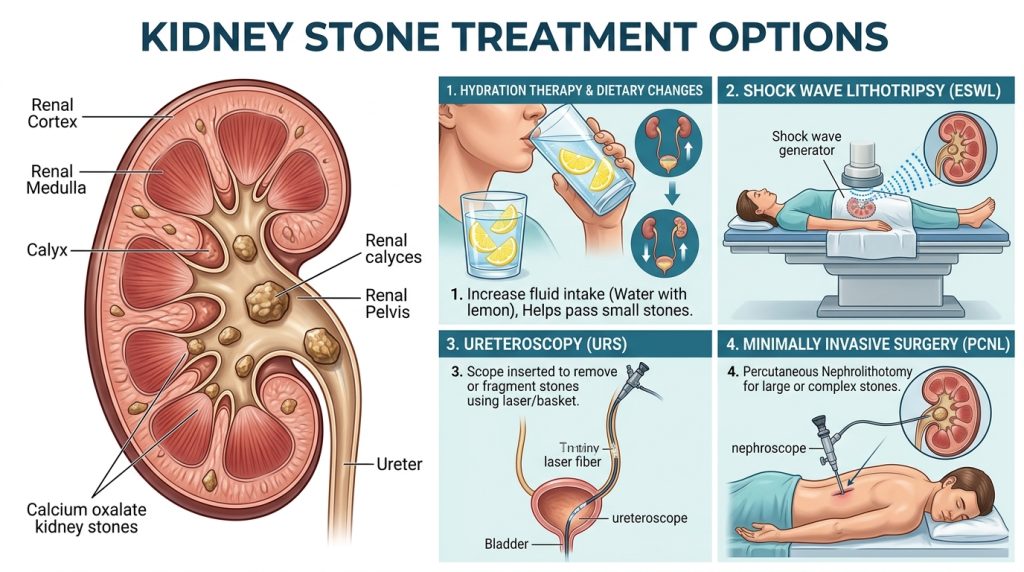
- Shock Wave Therapy (ESWL): Breaks the stone into smaller pieces.
- Ureteroscopy (URS): Removes or breaks the stone using a small camera and laser.
- PCNL Surgery: Removes large kidney stones through a small incision.
How to Prevent Kidney Stones ?
- Although kidney stones can return, healthy lifestyle habits can reduce the risk.
- Follow these simple tips:
- Drink plenty of water every day.
- Reduce salt intake.
- Eat a balanced diet.
- Avoid drinking too many sugary soft drinks.
- Eat enough fruits and vegetables.
- Limit excessive meat consumption.
- Maintain a healthy body weight.
- Exercise regularly.
- Follow your doctor’s advice if you have had kidney stones before.
Conclusion
Kidney stones are a common but treatable condition. They form when minerals and salts build up inside the kidneys and become hard deposits. Small stones often pass naturally with plenty of water and medication, while larger stones may require procedures such as Shock Wave Lithotripsy (ESWL), Ureteroscopy (URS), or Percutaneous Nephrolithotomy (PCNL). Recognizing symptoms early, seeking timely medical care, and following healthy lifestyle habits can help prevent complications and reduce the chance of future kidney stones. Staying hydrated, eating a balanced diet, and attending regular medical checkups are the best ways to maintain good kidney health.