


Introduction
Food is more than just nutrition—it is also a visual experience. Before tasting a meal, people often judge it by its appearance, and color plays one of the biggest roles in making food look fresh, delicious, and appealing. From brightly colored candies and soft drinks to golden cakes and vibrant fruit juices, food colors are widely used to enhance the appearance of many foods and beverages.
Food color, also known as food coloring or food dye, is a substance added to food or drinks to improve, restore, or change their color. Some food colors come from natural sources such as fruits, vegetables, flowers, and spices, while others are manufactured synthetically in laboratories. Both natural and artificial food colors are commonly used in the food industry, but they differ in their origin, stability, and potential health effects.
In recent years, consumers have become more interested in understanding what goes into their food. Many people now prefer products made with natural ingredients, including natural food colors, while others are concerned about the possible health effects of artificial food dyes. Learning about food colors helps consumers make informed choices and better understand food labels.
This article explores everything you need to know about food color, including its history, types, uses, benefits, possible risks, and safety guidelines.
What Is Food Color?
Food color is any natural or artificial substance that is added to food and beverages to change or enhance their appearance. It may be available in liquid, gel, powder, or paste form and is used in homes, restaurants, bakeries, and food manufacturing industries.
The main purpose of food color is to make food look more attractive and consistent. During processing, cooking, or storage, some foods lose their natural color. Adding food color helps restore their original appearance and improves their visual appeal.
Food color is commonly used in:
- Cakes and pastries
- Ice cream
- Candies and chocolates
- Soft drinks
- Fruit juices
- Yogurt
- Breakfast cereals
- Sauces
- Jellies
- Snack foods
- Bakery products
- Processed foods
History of Food Coloring
The use of food coloring dates back thousands of years. Ancient civilizations used natural ingredients such as saffron, turmeric, beetroot, berries, spinach, and flower extracts to color food and beverages.
During the 19th century, scientists developed synthetic food dyes that were brighter, cheaper, and more stable than natural colors. These artificial colors quickly became popular because they maintained their appearance even after cooking and long storage.
Today, many countries regulate food colors to ensure they meet safety standards before they are approved for use in foods.
Why Is Food Color Important?
Food color serves several important purposes.
1. Improves Appearance
Bright, attractive colors make food look fresher and more appetizing.
2. Restores Lost Color
Some foods lose their natural color during processing, freezing, heating, or exposure to light. Food coloring helps restore their original appearance.
3. Creates Product Identity
Consumers often recognize products by their familiar colors, such as orange-flavored drinks, strawberry yogurt, or chocolate desserts.
4. Supports Creative Food Design
Food coloring allows bakers, chefs, and food manufacturers to create visually appealing cakes, cookies, candies, desserts, and beverages.
Types of Food Color
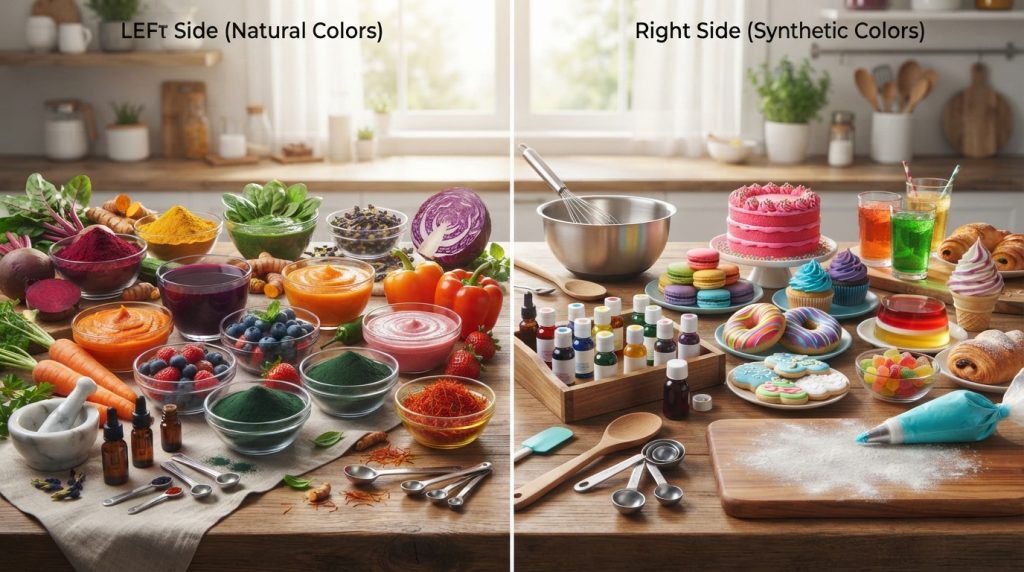
Food colors are mainly divided into two categories: natural food colors and artificial food colors. Each type has its own sources, characteristics, and uses.
1. Natural Food Colors
Natural food colors are obtained from plants, fruits, vegetables, flowers, spices, and algae. They are widely used in foods because they come from natural sources and are increasingly preferred by health-conscious consumers.
Common examples include:
-
Beetroot – Red or pink color
-
Turmeric – Bright yellow color
-
Spinach – Green color
-
Butterfly pea flower – Blue color
-
Purple cabbage – Purple or blue color
-
Paprika – Orange-red color
-
Spirulina – Blue-green color
-
Saffron – Golden yellow color
Natural food colors are commonly used in beverages, desserts, dairy products, bakery items, sauces, candies, and confectionery.
2. Artificial Food Colors
Artificial food colors, also called synthetic food dyes, are manufactured under controlled conditions to produce bright, stable, and long-lasting colors. They are widely used in commercial food production because they remain vibrant during processing, cooking, and storage.
Common examples include:
-
Red food dye
-
Yellow food dye
-
Blue food dye
-
Green food dye
Artificial food colors are commonly found in:
-
Soft drinks
-
Candies
-
Cakes
-
Cookies
-
Ice cream
-
Breakfast cereals
-
Packaged snacks
-
Jelly
-
Sports drinks
-
Processed desserts
3. Food Color Forms
Food colors are also available in different forms depending on their intended use:
-
Liquid Food Color – Easy to mix into drinks, batters, and frostings.
-
Gel Food Color – Highly concentrated and ideal for cake decorating.
-
Powder Food Color – Best for dry mixes, chocolates, and powdered foods.
-
Paste Food Color – Thick and vibrant, commonly used by professional bakers.
-
Oil-Based Food Color – Specially designed for coloring chocolate, butter, and other oil-based recipes.
Choosing the right type of food color depends on the recipe, desired color intensity, and whether a natural or artificial option is preferred.
Common Forms of Food Color
Food colors are available in several forms depending on their intended use.
- Liquid food color – Easy to mix into drinks, batters, and frostings.
- Gel food color – Highly concentrated and commonly used for cake decorating.
- Powder food color – Ideal for dry mixes and chocolate.
- Paste food color – Thick and vibrant, suitable for professional baking.
- Oil-based food color – Designed for coloring chocolate and butter-based products.
Each type offers different advantages depending on the recipe and desired result.
Side Effects of Food Color
Food colors approved by food safety authorities are generally considered safe when consumed within recommended limits. However, excessive intake of foods containing artificial food colors or individual sensitivity to certain dyes may cause unwanted effects in some people. It is important to understand that these reactions do not occur in everyone, but awareness helps consumers make informed choices.
1. Allergic Reactions
Some people may experience allergic reactions after consuming certain food colors. Symptoms can include skin rashes, itching, hives, swelling, or, in rare cases, breathing difficulties. Individuals with known allergies should always read food labels carefully.
2. Hyperactivity in Some Children
Research has suggested that some artificial food colors, especially when combined with certain preservatives, may contribute to increased hyperactivity or attention-related behavioral changes in a small number of children. However, scientific evidence remains mixed, and not all children are affected.
3. Headaches and Migraines
Certain individuals report headaches or migraines after consuming foods or drinks containing artificial food dyes. People who notice this pattern may benefit from keeping a food diary and discussing their symptoms with a healthcare professional.
4. Digestive Discomfort
Eating large amounts of brightly colored processed foods may cause stomach discomfort, nausea, bloating, or mild digestive irritation in some people. These effects are usually temporary and may be related to the overall ingredients rather than the food color alone.
5. High Consumption of Processed Foods
Artificial food colors are commonly found in processed foods such as candies, soft drinks, packaged snacks, cakes, cookies, and desserts. These products are often high in added sugars, unhealthy fats, and sodium. Frequent consumption may increase the risk of obesity, type 2 diabetes, high blood pressure, and heart disease.
6. Individual Sensitivity
Some people are more sensitive to specific food colors than others. If symptoms repeatedly occur after eating artificially colored foods, it may be helpful to avoid those products and seek medical advice.
How to Reduce the Risk
-
Choose fresh fruits and vegetables whenever possible.
-
Prefer foods colored with natural ingredients such as beetroot, turmeric, spinach, paprika, or butterfly pea flower.
-
Read ingredient labels before purchasing packaged foods.
-
Limit the intake of highly processed foods and sugary drinks.
-
Eat a balanced diet that includes a variety of whole foods.
-
If you have food allergies or sensitivities, consult a healthcare professional before making significant dietary changes.
Conclusion
Food color has become an essential part of the modern food industry, making foods and beverages more attractive, consistent, and visually appealing. From naturally colored fruit juices and vegetable-based products to colorful baked goods and confectionery, food colors help improve the overall eating experience.
Natural food colors, derived from fruits, vegetables, flowers, herbs, and spices, are increasingly popular because they can provide vibrant colors while aligning with consumer demand for more natural ingredients. Artificial food colors, on the other hand, offer excellent stability, consistency, and affordability, making them widely used in commercial food production.
Although approved food colors are considered safe when used within established regulatory limits, consuming large amounts of highly processed foods containing artificial colors is not recommended. A balanced diet rich in fresh, minimally processed foods remains the best approach to maintaining good health.
Consumers can make informed choices by reading ingredient labels, understanding the difference between natural and artificial food colors, and enjoying colorful foods in moderation. By combining awareness with healthy eating habits, it is possible to enjoy attractive, delicious meals while supporting long-term health and well-being.