


Introduction
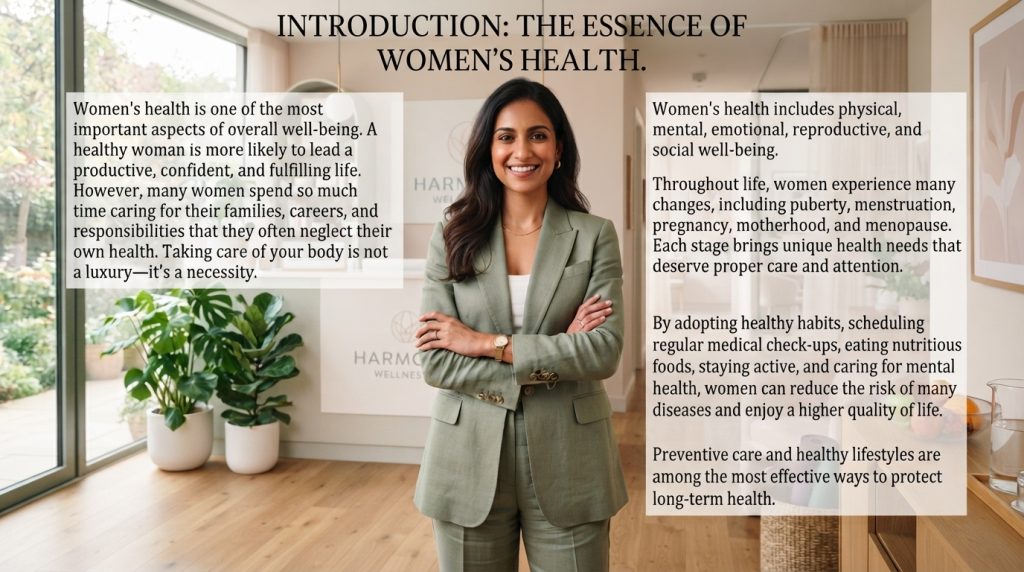
Women’s health is one of the most important aspects of overall well-being. A healthy woman is more likely to lead a productive, confident, and fulfilling life. However, many women spend so much time caring for their families, careers, and responsibilities that they often neglect their own health. Taking care of your body is not a luxury—it’s a necessity.
Women’s health includes physical, mental, emotional, reproductive, and social well-being. Throughout life, women experience many changes, including puberty, menstruation, pregnancy, motherhood, and menopause. Each stage brings unique health needs that deserve proper care and attention.
By adopting healthy habits, scheduling regular medical check-ups, eating nutritious foods, staying active, and caring for mental health, women can reduce the risk of many diseases and enjoy a higher quality of life. Preventive care and healthy lifestyles are among the most effective ways to protect long-term health.
Why Women’s Health Matters
Women’s health affects families, workplaces, and communities. When women are healthy, they are better able to care for themselves and others. Good health improves energy levels, emotional well-being, productivity, and longevity.
Women may experience health conditions differently than men. Certain conditions, such as osteoporosis, pregnancy-related complications, and some autoimmune diseases, occur more frequently in women. Heart disease is also a major health concern for women and should never be overlooked.

Essential Components of Women’s Health
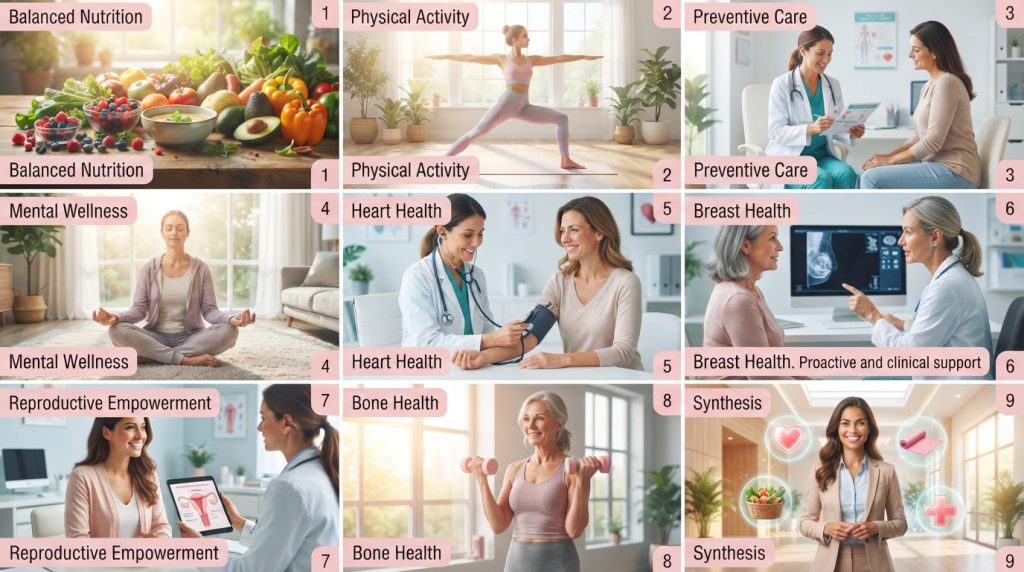
1. Balanced Nutrition
Healthy eating provides the body with vitamins, minerals, protein, healthy fats, and fiber needed for daily activities.
Important nutrients include:
Iron to prevent anemia
Calcium for strong bones
Vitamin D for bone health
Protein for muscle repair
Folate during childbearing years
Omega-3 fatty acids for heart and brain health
A balanced diet should include:
Fresh fruits
Vegetables
Whole grains
Lean proteins
Low-fat dairy
Nuts and seeds
Plenty of water
Limiting sugary drinks, processed foods, excessive salt, and unhealthy fats helps reduce the risk of obesity, diabetes, and heart disease.
2. Regular Physical Activity
Exercise benefits both physical and mental health. It helps:
Maintain a healthy weight
Strengthen bones and muscles
Improve heart health
Reduce stress
Increase energy
Improve sleep quality
Adults should aim for regular physical activity each week, combining aerobic exercise with strength training.
Activities include:
Walking
Running
Cycling
Swimming
Yoga
Dancing
Strength training

3. Mental and Emotional Well-being
Mental health is just as important as physical health.
Women may experience stress from balancing work, family, finances, and personal responsibilities.
Healthy ways to support mental health include:
Getting enough sleep
Practicing mindfulness
Talking with trusted friends
Spending time outdoors
Exercising regularly
Seeking professional help when needed
Persistent sadness, anxiety, or loss of interest in daily activities should be discussed with a healthcare professional.

4. Reproductive Health
Reproductive health covers every stage of a woman’s life.
It includes:
Menstrual health
Fertility
Pregnancy
Childbirth
Family planning
Menopause
Women should understand their menstrual cycle and pay attention to changes such as severe pain, unusually heavy bleeding, or irregular periods, which may require medical evaluation.

Common Health Conditions in Women
Heart Disease
Heart disease is one of the leading causes of death among women.
Risk factors include:
High blood pressure
High cholesterol
Diabetes
Smoking
Obesity
Physical inactivity
Women sometimes experience less obvious symptoms than men, including fatigue, nausea, shortness of breath, or jaw pain.

Breast Health
Women should become familiar with how their breasts normally look and feel.
Report any:
New lump
Skin changes
Nipple discharge
Persistent pain
Regular screening should follow healthcare provider recommendations.

Osteoporosis
Bone density naturally decreases with age, especially after menopause.
Ways to reduce risk include:
Calcium-rich foods
Vitamin D
Weight-bearing exercise
Avoiding smoking
Limiting alcohol
Polycystic Ovary Syndrome (PCOS)
PCOS is a common hormonal condition that may cause:
Irregular periods
Acne
Weight gain
Difficulty becoming pregnant
Excess hair growth
Early diagnosis and treatment can improve symptoms and reduce complications.

Urinary Tract Infections (UTIs)
Women are more likely than men to develop UTIs.
Symptoms include:
Burning during urination
Frequent urination
Lower abdominal discomfort
Prompt treatment helps prevent kidney infections.
Pregnancy and Maternal Health
Healthy pregnancy begins before conception.
Important practices include:
Prenatal check-ups
Healthy diet
Prenatal vitamins
Regular exercise
Avoiding alcohol and tobacco
Managing chronic illnesses
After childbirth, postpartum care is equally important for both physical recovery and mental well-being.
Menopause
Menopause usually occurs between ages 45 and 55.
Common symptoms include:
Hot flashes
Night sweats
Mood changes
Sleep problems
Vaginal dryness
Healthy eating, regular exercise, stress management, and medical guidance can help women manage symptoms effectively.
Preventive Health Screenings
Routine health check-ups help detect problems early.
Important screenings may include:
Blood pressure
Blood sugar
Cholesterol
Breast screening
Cervical screening
Bone density testing
Eye examinations
Dental check-ups
The appropriate schedule depends on age, medical history, and individual risk factors.
Healthy Lifestyle Habits
Simple daily habits can make a significant difference:
Sleep 7–9 hours each night.
Drink enough water.
Eat colorful fruits and vegetables.
Exercise regularly.
Avoid smoking.
Limit alcohol.
Maintain a healthy weight.
Practice good hygiene.
Manage stress effectively.
Stay connected with supportive family and friends.
Women’s Health Across Different Life Stages
Teenage Years
Focus on:
Healthy eating
Physical activity
Menstrual education
HPV vaccination where recommended
Mental health support
Adulthood
Prioritize:
Career-life balance
Family planning
Routine health screenings
Heart health
Stress management
Middle Age
Pay attention to:
Menopause
Bone health
Blood pressure
Diabetes prevention
Cancer screenings
Older Age
Continue focusing on:
Mobility
Healthy nutrition
Bone strength
Brain health
Social connections
Regular medical care
Tips for Better Women’s Health
Never ignore unusual symptoms.
Schedule annual health check-ups.
Listen to your body’s signals.
Learn your family medical history.
Stay physically active.
Eat nutritious meals.
Protect your mental health.
Practice safe relationships.
Maintain a healthy body weight.
Make self-care a priority.