

Introduction
Heart disease is a condition that affects the heart and blood vessels, making it difficult for the heart to pump blood properly throughout the body. It is one of the most common health problems worldwide. Heart disease can develop due to blocked arteries, high blood pressure, unhealthy lifestyle habits, smoking, obesity, diabetes, and lack of physical activity.
Signs and Symptoms of Heart Disease
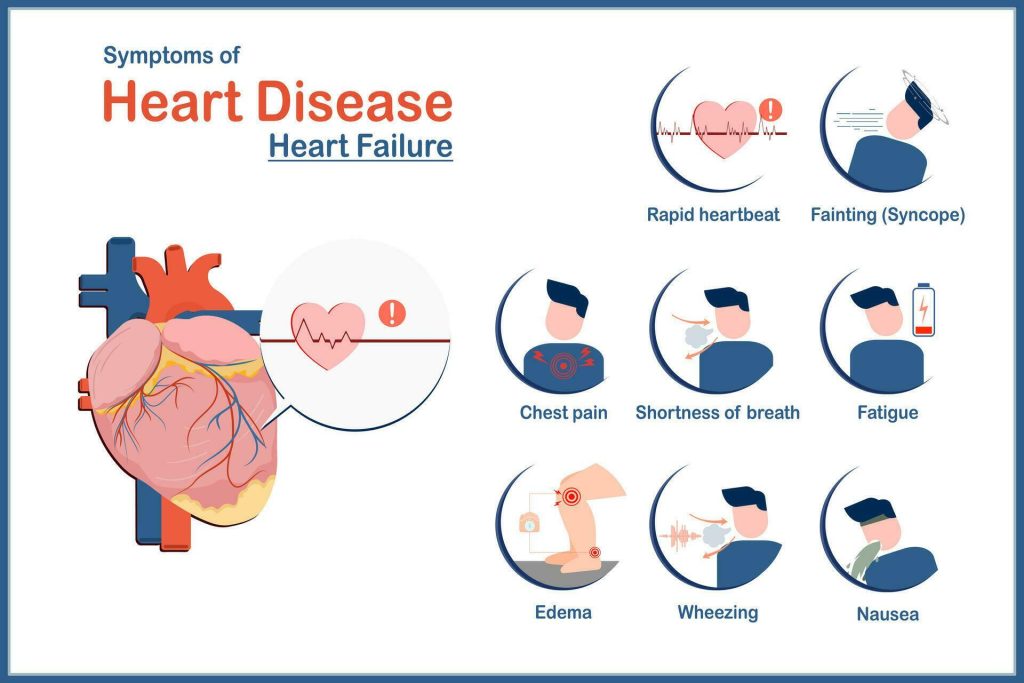
The signs and symptoms of heart disease may vary depending on the type and severity of the condition. Common symptoms include:
- Chest pain or discomfort (angina)
- Shortness of breath
- Rapid, slow, or irregular heartbeat
- Fatigue and weakness
- Dizziness or fainting
- Swelling in the legs, ankles, or feet
- Pain in the neck, jaw, throat, back, or arms
- Excessive sweating
- Nausea or vomiting
- Difficulty performing physical activities
If these symptoms become severe, immediate medical attention is required.
Treatment of Heart Disease
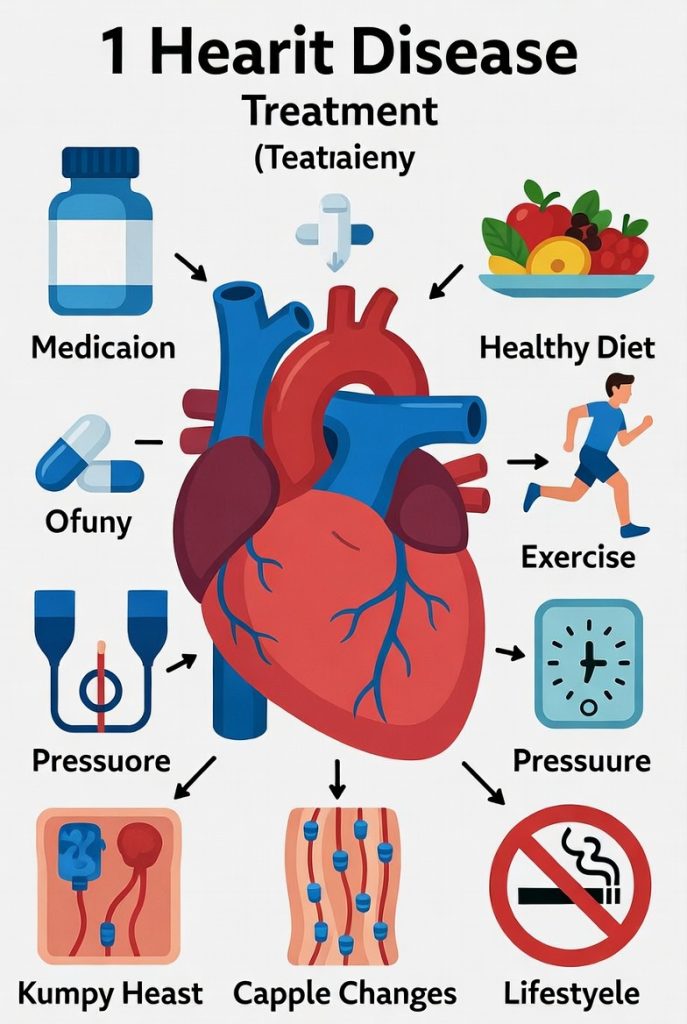
Healthy Lifestyle Changes
Lifestyle modification is the first step in treating heart disease.
Healthy Diet
Patients should:
- Eat more fruits and vegetables.
- Choose whole grains.
- Eat lean meat, fish, and beans.
- Reduce salt, sugar, and unhealthy fats.
- Avoid processed and junk foods.
Regular Exercise
Regular physical activity helps strengthen the heart and improve blood circulation. Walking, cycling, and swimming are beneficial exercises.
Weight Control
Maintaining a healthy weight reduces pressure on the heart and lowers the risk of complications.
Quit Smoking
Smoking damages blood vessels and increases the risk of heart attacks. Quitting smoking greatly improves heart health.
Reduce Stress
Stress can negatively affect the heart. Meditation, yoga, and relaxation exercises can help manage stress.
Medications
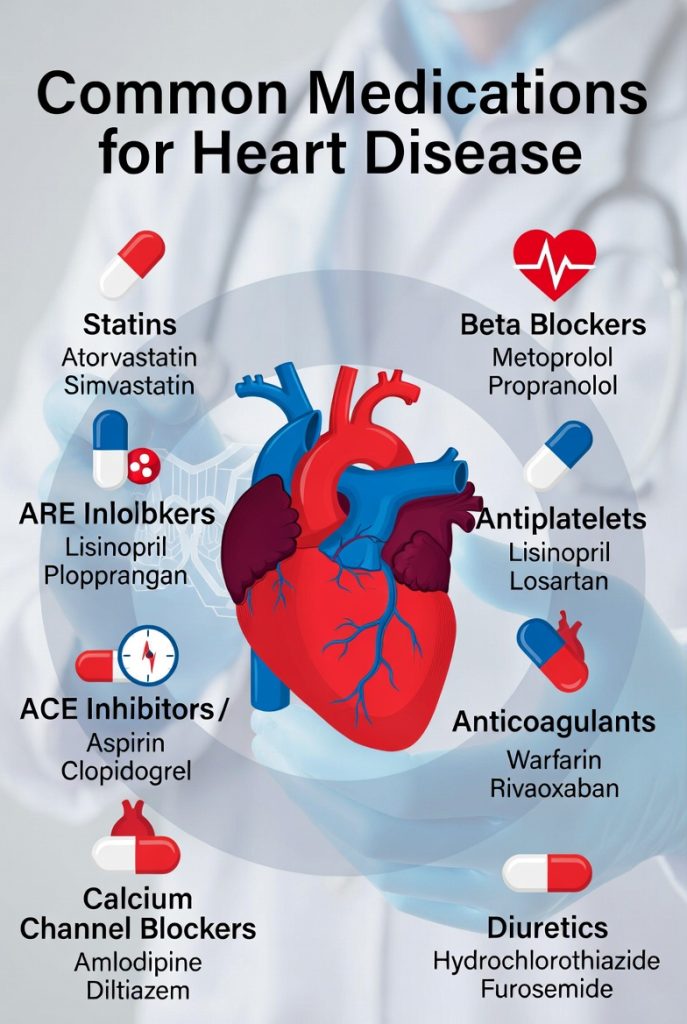
Doctors may prescribe medicines such as:
- Aspirin to prevent blood clots.
- Statins to lower cholesterol levels.
- Beta-blockers to reduce heart workload.
- ACE inhibitors to control blood pressure.
- Anticoagulants (blood thinners) to prevent clot formation.
Patients should take medications only as prescribed by their doctor.
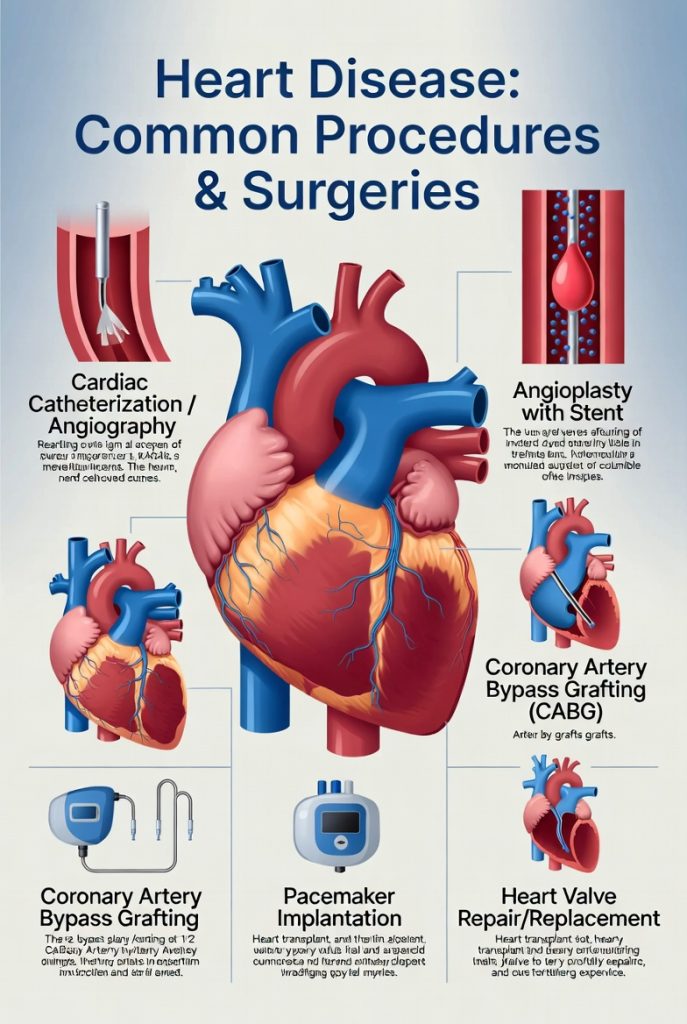
Medical Procedures and Surgery
When medicines and lifestyle changes are not enough, medical procedures may be required.
Angioplasty and Stent
A blocked artery is opened using a small balloon, and a stent is placed to keep it open.
Bypass Surgery
Surgeons create a new pathway for blood flow around blocked arteries.
Pacemaker
A small device is implanted to control abnormal heartbeats.
Heart Valve Surgery
Damaged heart valves may be repaired or replaced.
Cardiac Rehabilitation
Cardiac rehabilitation is a recovery program that includes:
- Exercise training
- Healthy eating guidance
- Stress management
- Education about heart health
It helps patients recover faster and prevent future heart problems.