

Heart Disease
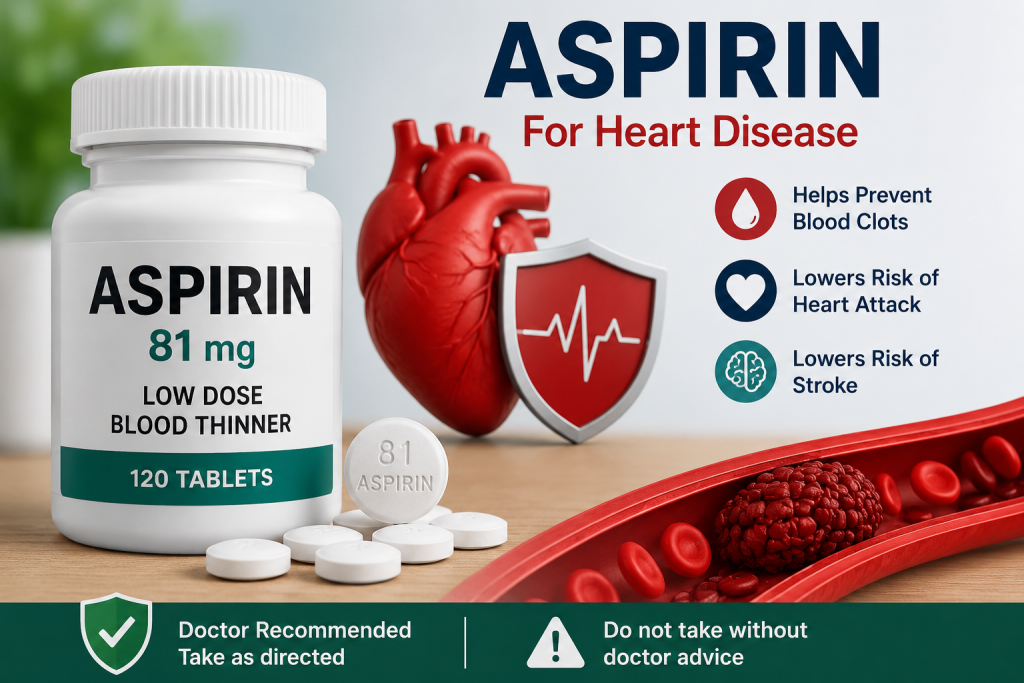
Introduction Aspirin is a medicine that helps keep your blood flowing smoothly by stopping blood clots from forming too easily. In heart disease, it is often used as an antiplatelet drug, meaning it makes blood platelets less likely to stick together and form clots that can block arteries.
Why is it used for heart disease?
When blood clots block the arteries that carry blood to the heart, a heart attack can happen. Aspirin helps reduce the chance of these clots forming.
Benefits
- Helps prevent heart attacks.
- Helps prevent some types of strokes.
- Often given to people who have already had a heart attack or certain heart problems.
Common Side Effects
- Stomach pain or upset stomach
- Heartburn
- Easy bruising
- Bleeding more easily than usual
Important Note
Do not take aspirin every day unless your doctor tells you to. It is not safe for everyone and can increase the risk of bleeding.
Common Medicines for Heart Disease
- Aspirin – Helps prevent blood clots.
- Clopidogrel – Reduces the risk of heart attack and stroke.
- Atorvastatin – Lowers bad cholesterol.
- Rosuvastatin – Helps protect blood vessels.
- Metoprolol – Lowers heart rate and blood pressure.
- Bisoprolol – Used for heart failure and high blood pressure.
- Atenolol – Helps the heart work more efficiently.
- Lisinopril – Treats high blood pressure and heart failure.
- Enalapril – Improves blood flow and heart function.
- Losartan – Controls blood pressure.
- Valsartan – Used for heart failure and hypertension.
- Nitroglycerin – Relieves chest pain.
- Furosemide – Removes extra fluid from the body.
- Spironolactone – Helps in heart failure treatment.
- Warfarin – Prevents dangerous blood clots.
- Fenofibrate (TGR) -Increases good cholesterol (HDL)and Lowers triglycerides (fat in the blood).