

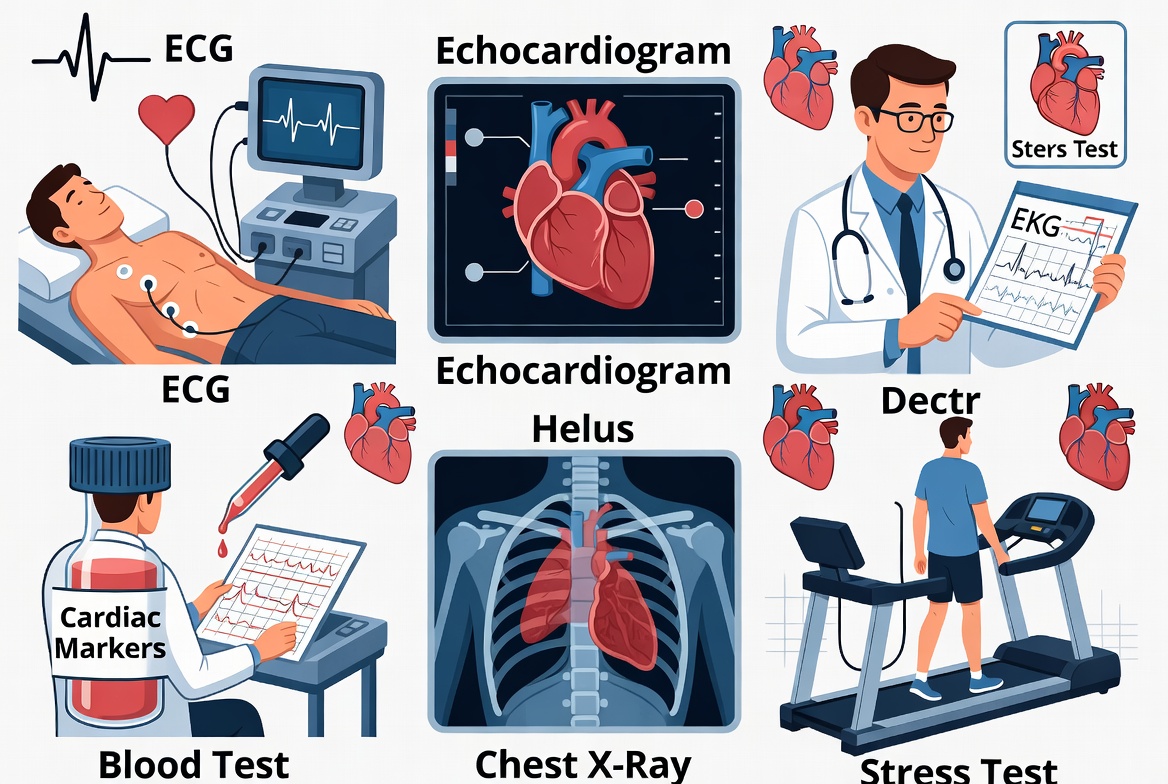
How to test Heart Diseases ?
Testing for heart disease typically starts with a doctor's evaluation based on your symptoms (like chest pain, shortness of breath, fatigue, palpitations), family history, risk factors (age, smoking, high blood pressure, diabetes, high cholesterol, obesity, inactivity), and a physical exam.
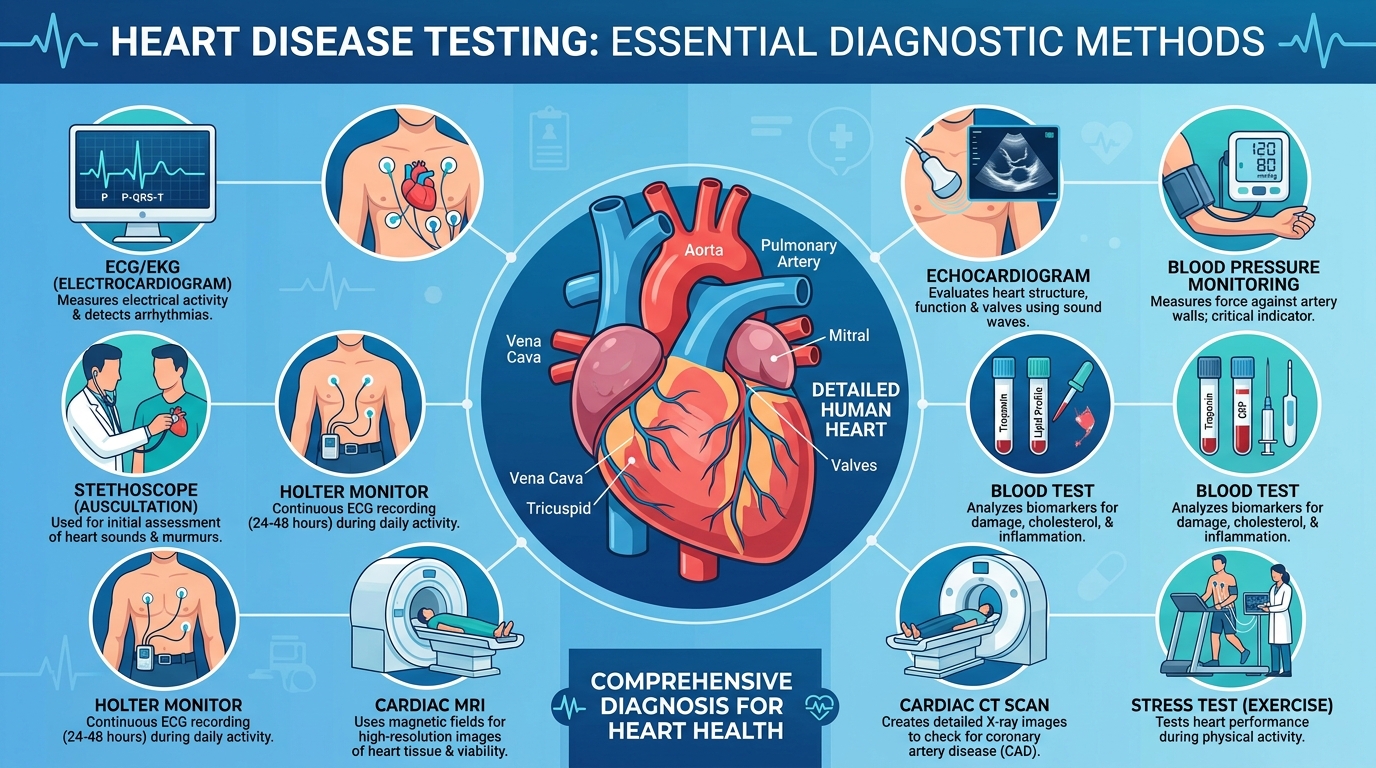
1. Initial Screening and Basic Checks (Often Routine)
These are non-invasive and done during regular check-ups:Blood pressure measurement: High blood pressure is a major risk factor with no symptoms. Recommended at every visit or annually.Blood tests:Cholesterol (total, LDL, HDL, triglycerides) — every 4–6 years for most adults, more often if at risk.Blood sugar/glucose (for diabetes risk).High-sensitivity C-reactive protein (hs-CRP) for inflammation.Cardiac biomarkers like troponin (for heart damage, e.g., after a suspected attack).Other markers (e.g., BNP/NT-proBNP for heart failure, lipoprotein(a)).Body weight/BMI and waist circumference: To assess obesity-related risk.Pulse check: For irregular heartbeats.Risk calculators (e.g., AHA PREVENT tool) use these to estimate your 10- or 30-year cardiovascular risk.
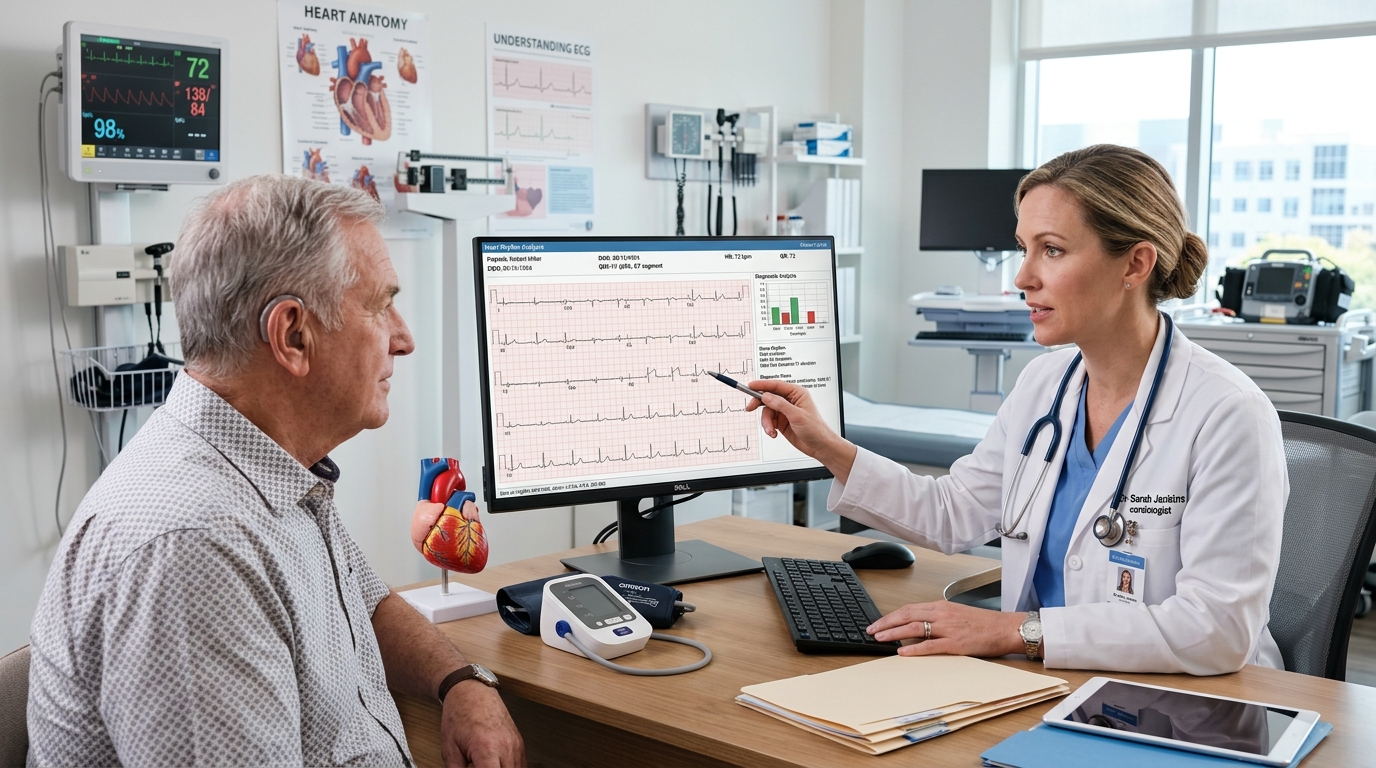
2. Common Diagnostic Tests for Suspected Heart Disease
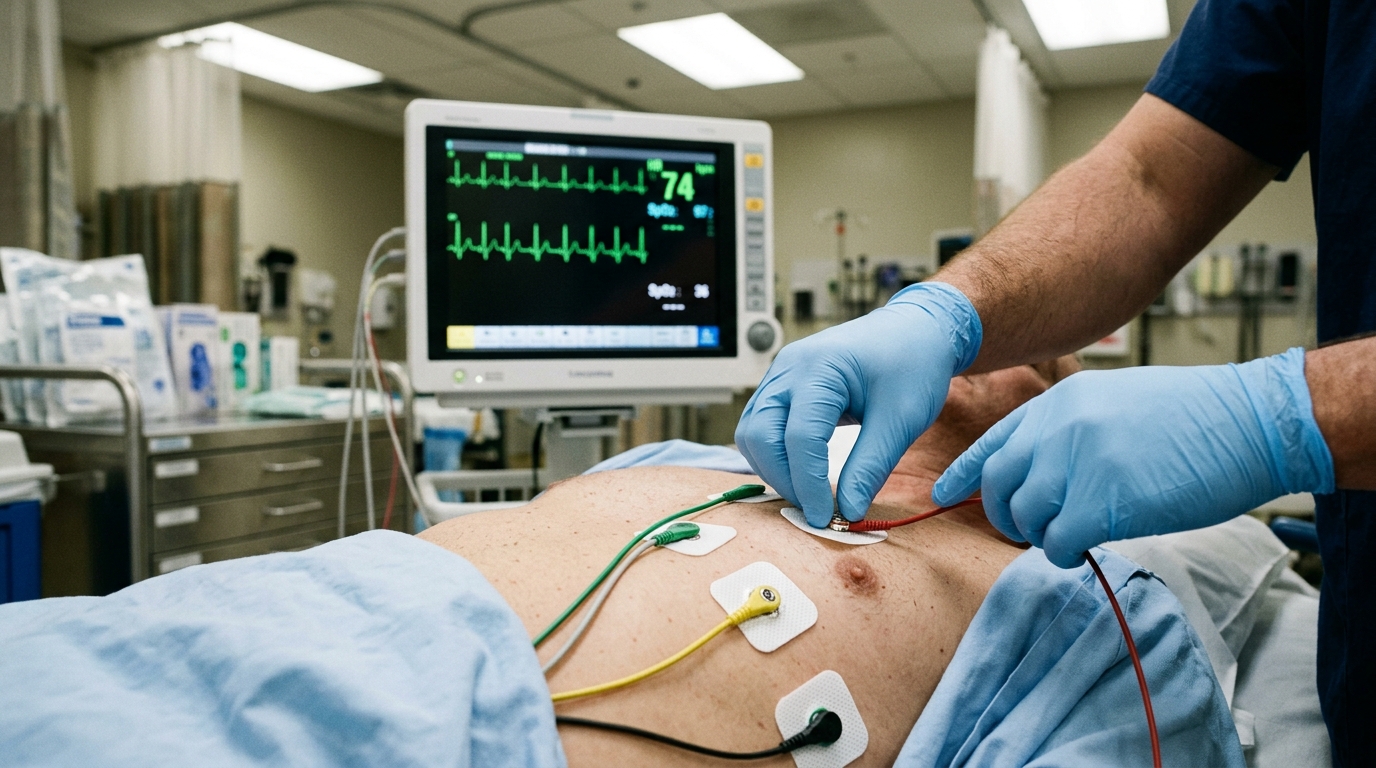
If symptoms or risk suggest issues, doctors may order:Electrocardiogram (ECG/EKG): Records the heart's electrical activity. Quick, painless; detects arrhythmias, past heart attacks, or ischemia.Holter monitor or event monitor: Portable ECG worn for 24+ hours (or longer) to catch intermittent problems.Chest X-ray: Shows heart size/shape and lung conditions.Echocardiogram (echo): Ultrasound of the heart to assess structure, valves, pumping function (ejection fraction), and blood flow. Can be done at rest or with stress.Stress test (exercise or pharmacological): Monitors heart while exercising (treadmill/bike) or with medication. Often combined with ECG, echo, or nuclear imaging to detect reduced blood flow under stress.
3. Advanced Imaging and Invasive Tests
Coronary calcium scan (CT): Measures calcium buildup in arteries to assess plaque risk (non-invasive).CT coronary angiogram (CTCA): Uses contrast dye and CT to visualize coronary arteries.Cardiac MRI: Detailed images of heart structure and function.Coronary angiogram (cardiac catheterization): Invasive "gold standard" — catheter threaded to heart arteries, dye injected for X-ray imaging. Can also allow interventions like stenting.

When to Seek Testing?
See a doctor promptly if you have:Chest pain/pressureShortness of breathUnexplained fatigueDizziness, faintingSwelling in legsFamily history of early heart diseaseRoutine screening is advised starting in your 20s for blood pressure/cholesterol, with more frequent checks based on risk.