

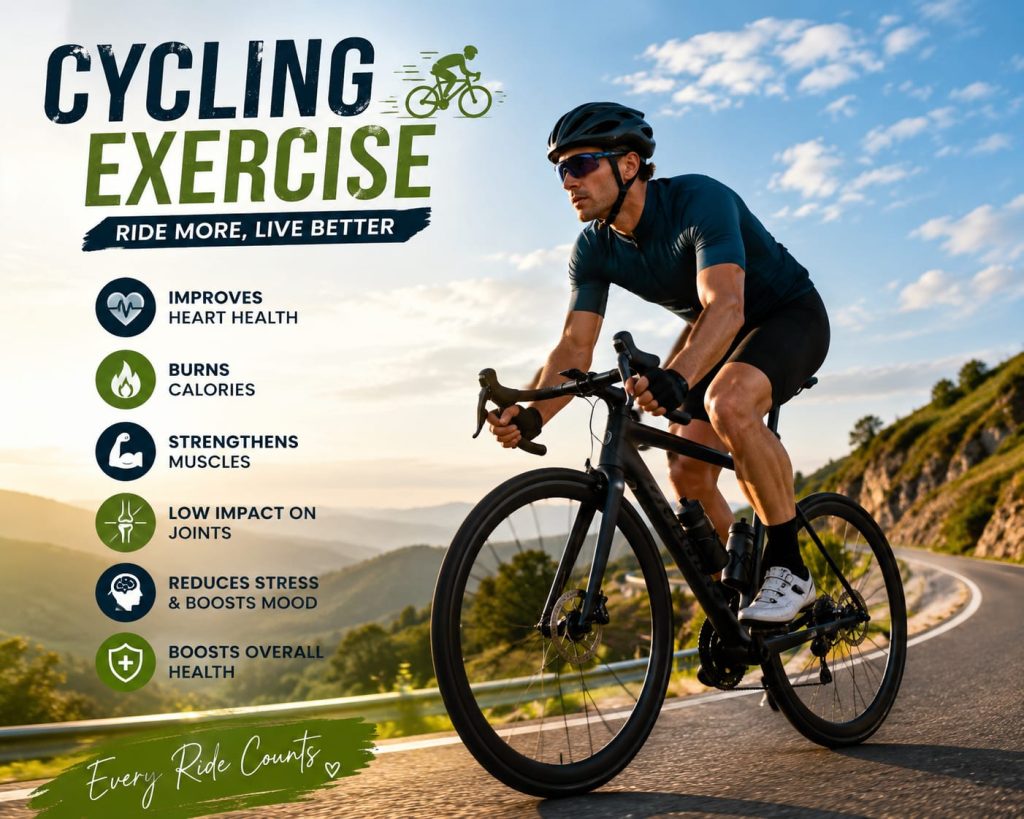
Cycling Exercise: The Complete Guide to Better Health, Fitness, and Weight Loss
Cycling is one of the most enjoyable and effective forms of exercise. Whether you ride a bicycle outdoors, commute to work, or use a stationary bike at the gym, cycling provides a full-body workout while being gentle on your joints. It is suitable for people of all ages and fitness levels, making it one of the most popular exercises around the world.
In today’s busy lifestyle, maintaining good health has become more important than ever. Regular cycling helps improve physical fitness, supports mental well-being, and reduces the risk of many chronic diseases. It is an affordable activity that requires minimal equipment and can easily become part of your daily routine.
What is Cycling Exercise?
Cycling exercise is a physical activity that involves riding a bicycle using leg power. It improves cardiovascular fitness, strengthens muscles, burns calories, and increases endurance. Cycling can be done for recreation, transportation, sports, or fitness training.
Whether you cycle on roads, mountain trails, parks, or indoor bikes, the health benefits remain significant when practiced regularly.
Health Benefits of Cycling
1.Supports Weight Loss
Cycling is an excellent calorie-burning exercise. Depending on your speed and body weight, you can burn between 300 and 700 calories per hour. Combined with a healthy diet, regular cycling helps reduce body fat and maintain a healthy weight.
2.Improves Heart Health
Cycling strengthens the heart, improves blood circulation, and lowers blood pressure. Regular cycling reduces the risk of heart disease, stroke, and high cholesterol by improving cardiovascular fitness.
3.Strengthens Muscles
Cycling mainly works the leg muscles, including the quadriceps, hamstrings, calves, and glutes. It also strengthens the core muscles, helping improve balance and posture.
4.Gentle on the Joints
Unlike running, cycling is a low-impact exercise. It places less stress on the knees, hips, and ankles, making it suitable for older adults and people recovering from injuries.
5.Improves Mental Health
Cycling releases endorphins, often called “feel-good hormones.” These natural chemicals help reduce stress, anxiety, and depression while improving mood and mental clarity.
6.Increases Stamina
Regular cycling improves endurance by strengthening the heart and lungs. As your stamina increases, everyday activities become easier and less tiring.
7.Boosts the Immune System
Moderate cycling helps improve immune function by increasing blood circulation and supporting healthy body systems, reducing the likelihood of common illnesses.
Cycling for Weight Loss
Weight loss occurs when you burn more calories than you consume. Cycling is an effective way to create this calorie deficit. Beginners can start with 20–30 minutes of cycling three to five times a week. As fitness improves, the duration and intensity can gradually increase.
To maximize weight loss:
- Ride consistently.
- Combine cycling with a balanced diet.
- Stay hydrated.
- Include strength training exercises.
- Get enough sleep.
Different Types of Cycling
Road Cycling
Road cycling is performed on paved roads using lightweight bicycles. It is excellent for improving speed, endurance, and cardiovascular health.
Mountain Biking
Mountain biking is done on rough terrain and trails. It builds strength, balance, coordination, and overall fitness while providing an adventurous outdoor experience.
Indoor Cycling
Indoor cycling uses stationary bikes at home or in fitness centers. It allows year-round exercise regardless of weather conditions and is ideal for structured workouts.
Commuter Cycling
Using a bicycle for daily transportation helps improve fitness while reducing transportation costs and environmental pollution.
Safety Tips for Cycling
To enjoy cycling safely:
- Always wear a properly fitted helmet.
- Check your brakes and tires before every ride.
- Wear bright or reflective clothing.
- Follow traffic rules and signals.
- Stay hydrated during long rides.
- Avoid using mobile phones while cycling.
- Use lights when riding at night.
Beginner Cycling Plan
Week 1:
Ride for 20 minutes, three times a week at a comfortable pace.
Week 2:
Increase to 30 minutes, four times a week.
Week 3:
Ride for 40 minutes and include short intervals of faster cycling.
Week 4:
Aim for 45–60 minutes, four to five days a week while maintaining a steady pace.
Common Mistakes to Avoid
Many beginners make mistakes that slow their progress. Avoid these common errors:
- Riding with poor posture.
- Skipping warm-up and cool-down exercises.
- Ignoring hydration.
- Overtraining without proper rest.
- Using an incorrectly adjusted bicycle.
- Wearing unsuitable footwear.
Nutrition for Cyclists
Proper nutrition supports better performance and faster recovery.
Before cycling: Eat light meals such as bananas, oats, whole-grain toast, or yogurt.
After cycling: Consume protein-rich foods like eggs, chicken, fish, milk, or legumes to repair muscles.
Drink plenty of water before, during, and after every ride
Conclusion
Cycling is one of the best exercises for improving overall health, increasing fitness, and supporting long-term weight management. It strengthens the heart, builds muscles, improves mental well-being, and helps prevent many lifestyle-related diseases. Since it is enjoyable, affordable, and suitable for all age groups, cycling is an exercise that almost everyone can include in their daily routine.
Start with short rides, remain consistent, and gradually challenge yourself. Every ride brings you one step closer to a healthier, stronger, and happier life.