Introduction
Tuberculosis (TB) is one of the world's oldest and most common infectious diseases. It primarily affects the lungs but can also spread to other parts of the body, such as the brain, kidneys, spine, and lymph nodes. TB is caused by the bacterium Mycobacterium tuberculosis and spreads through tiny droplets released into the air when an infected person coughs, sneezes, or speaks.
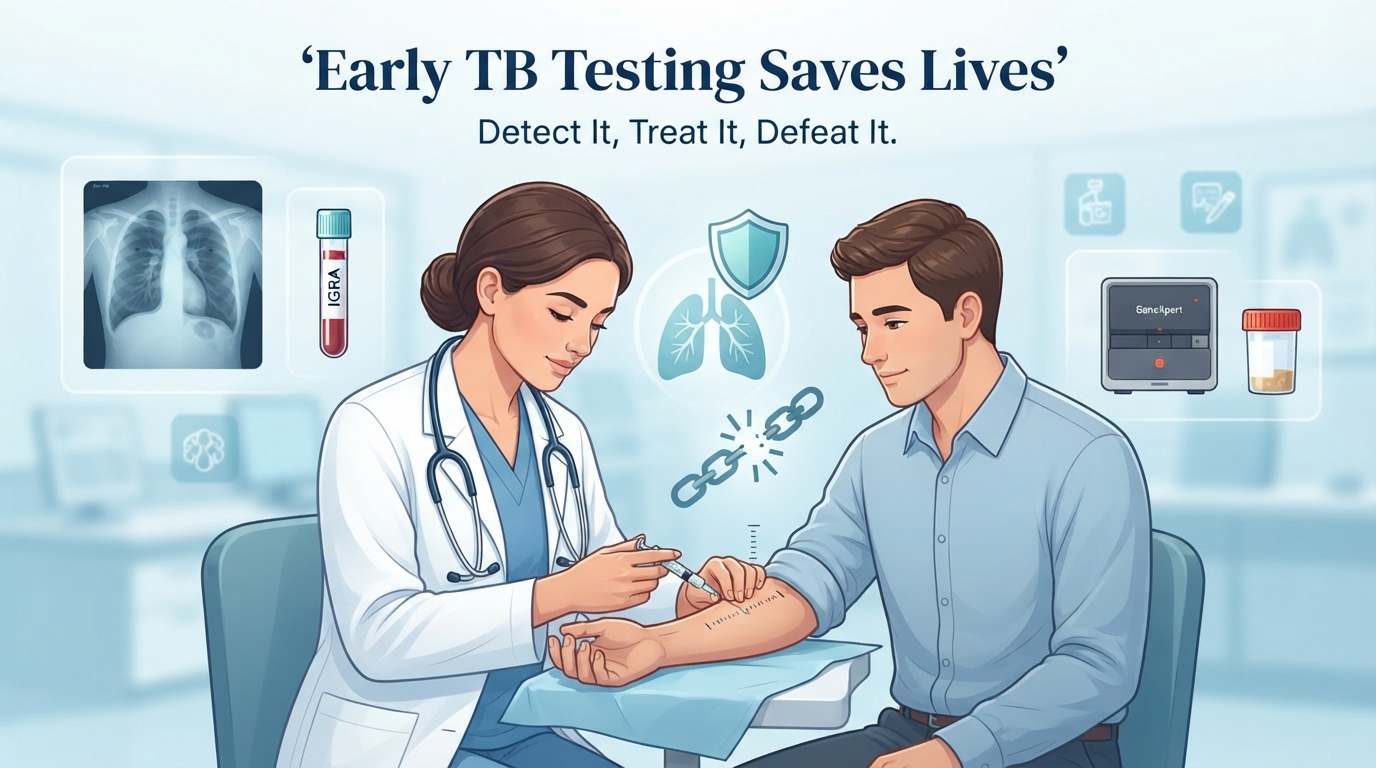
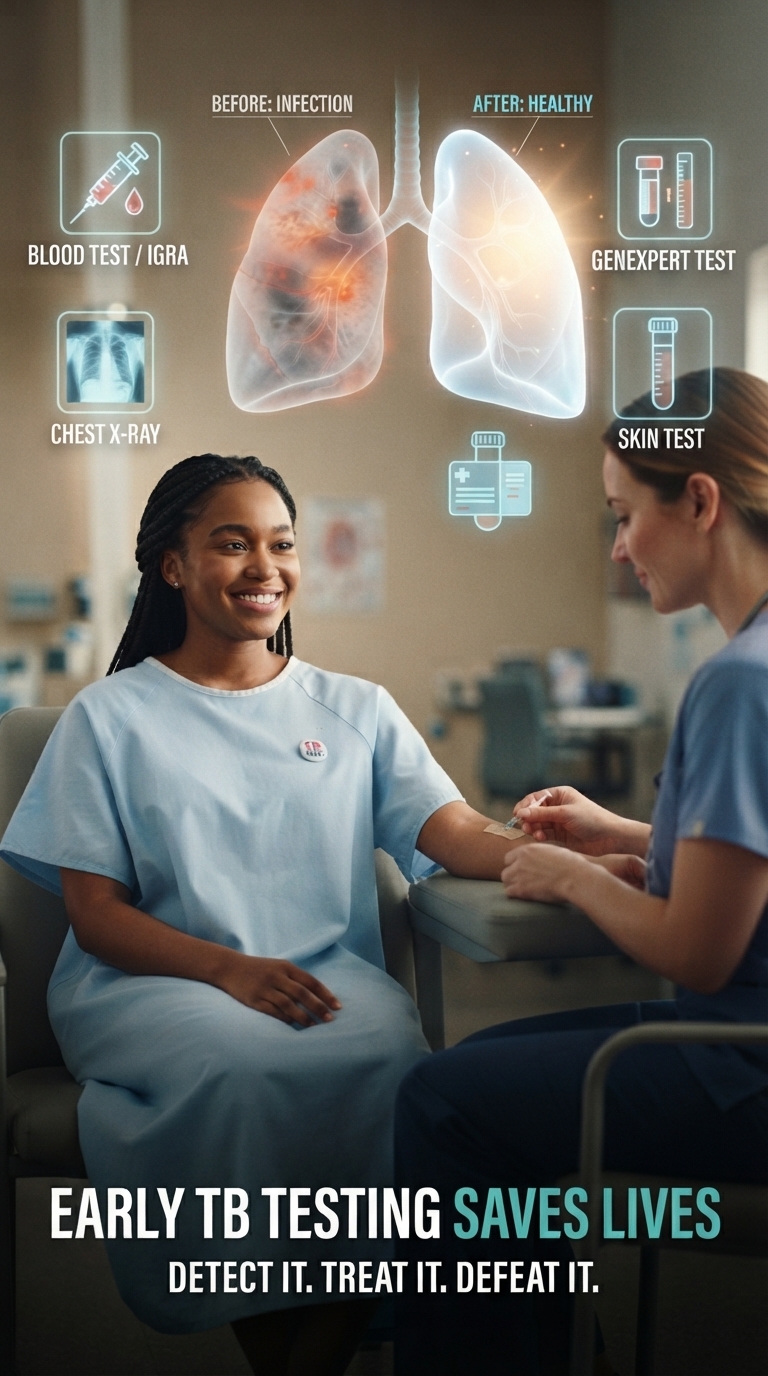
Although TB is preventable and curable, millions of people are diagnosed with the disease every year. Early testing plays a crucial role in controlling its spread and ensuring successful treatment. Modern TB testing methods help doctors detect both active tuberculosis and latent TB infection before serious complications develop.
This article explains tuberculosis testing, who should get tested, different diagnostic methods, and why early diagnosis is essential.
What Is Tuberculosis?
Tuberculosis is a contagious bacterial infection that most commonly attacks the lungs (pulmonary TB). However, it can also affect other organs, including:
- Brain
- Kidneys
- Bones
- Spine
- Lymph nodes
Not everyone infected with TB bacteria becomes sick. Some people have latent TB infection (LTBI), meaning the bacteria remain inactive in the body without causing symptoms. Others develop active TB disease, which can spread to others if left untreated.
Why Is TB Testing Important?
Tuberculosis testing helps healthcare providers:
- Detect TB infection early
- Differentiate between latent and active TB
- Prevent the spread of infection
- Start treatment before complications occur
- Protect family members and close contacts
- Reduce the risk of severe illness and death
Early diagnosis significantly improves treatment success rates.
Who Should Get Tested for Tuberculosis?
TB testing is recommended for people who:
- Have a persistent cough lasting more than two weeks
- Experience unexplained weight loss
- Have night sweats
- Develop persistent fever
- Cough up blood
- Have chest pain
- Have been in close contact with a TB patient
- Have HIV/AIDS
- Have diabetes
- Take medications that weaken the immune system
- Work in healthcare settings
- Live in crowded environments
- Have recently traveled to areas where TB is common
Symptoms That May Require TB Testing
Common symptoms include:
- Persistent cough
- Cough lasting over two weeks
- Chest pain
- Coughing up blood
- Fever
- Night sweats
- Fatigue
- Loss of appetite
- Weight loss
- Weakness
Some people with latent TB may have no symptoms at all.
Types of Tuberculosis Tests...
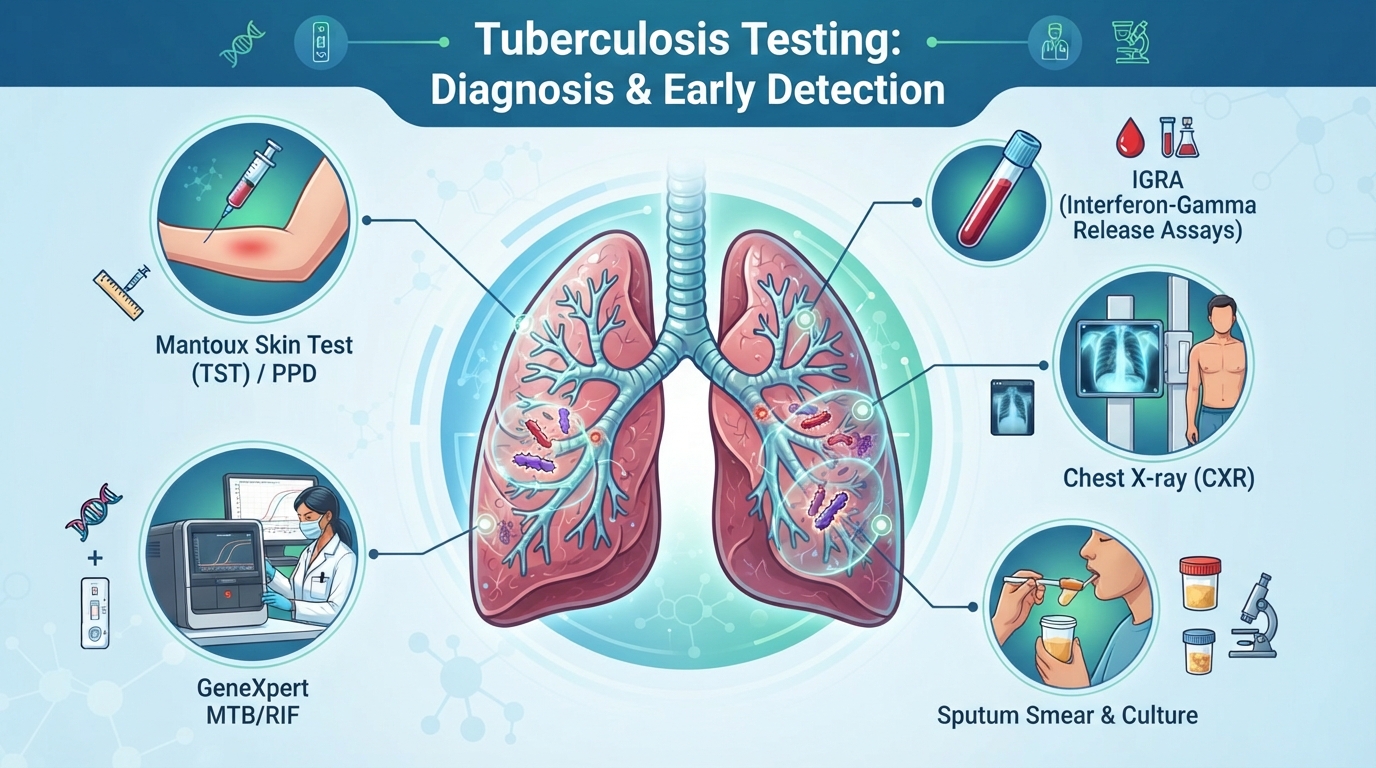
1. Tuberculin Skin Test (TST)
The Tuberculin Skin Test, also called the Mantoux Test, is one of the oldest methods for detecting TB infection.
How it works
- A small amount of purified protein derivative (PPD) is injected just under the skin of the forearm.
- The patient returns after 48–72 hours.
- The healthcare provider measures any swelling at the injection site.
Advantages
- Simple
- Low cost
- Widely available
Limitations
- Requires two clinic visits
- May give false-positive results in people vaccinated with BCG
- Cannot distinguish between latent and active TB
2. TB Blood Test (IGRA)
Interferon-Gamma Release Assays (IGRAs) are modern blood tests used to detect TB infection.
Examples include:
- QuantiFERON-TB Gold Plus
- T-SPOT.TB
Procedure
- A blood sample is collected.
- The laboratory measures the immune response to TB proteins.
Advantages
- Only one visit needed
- More accurate than skin testing in BCG-vaccinated individuals
- No need to return for result reading
Limitations
- More expensive
- Requires laboratory facilities
3. Chest X-ray
A chest X-ray helps identify lung damage caused by active tuberculosis.
Doctors may observe:
- White patches
- Lung cavities
- Fluid accumulation
- Abnormal shadows
Chest X-rays alone cannot confirm TB but are valuable when combined with other tests.
4. Sputum Smear Microscopy
This is one of the most common tests for active pulmonary TB.
Procedure
- The patient coughs up sputum (mucus from the lungs).
- The sample is examined under a microscope.
If TB bacteria are seen, the test is considered positive.
Advantages
- Quick
- Affordable
- Useful in many healthcare settings
Limitations
- Less sensitive in early disease
- May miss cases with low bacterial counts
5. Sputum Culture
Sputum culture is considered the gold standard for confirming TB.
Procedure
- A sputum sample is placed in a laboratory culture medium.
- TB bacteria are allowed to grow.
- Specialists identify the bacteria.
Advantages
- Highly accurate
- Confirms diagnosis
- Detects drug resistance
Limitations
- Results can take several weeks because TB bacteria grow slowly.
6. GeneXpert (CBNAAT)
GeneXpert is a rapid molecular test that detects TB bacteria and resistance to the antibiotic rifampicin.
Procedure
- A sputum sample is collected.
- The sample is placed into the GeneXpert machine.
- Results are available in about two hours.
Advantages
- Rapid diagnosis
- High accuracy
- Detects drug-resistant TB early
This test is widely recommended by global health organizations.
How to Prepare for TB Testing
Preparation depends on the test.
Skin Test
- Wear clothing that allows easy access to your forearm.
- Return within 48–72 hours for the result.
Blood Test
- Usually no fasting is required.
Sputum Test
- Provide an early-morning sputum sample if instructed.
- Avoid saliva; cough deeply to produce mucus from the lungs.
Chest X-ray
- Remove metal objects such as jewelry before the scan.
Understanding TB Test Results
Negative Result
May indicate:
- No TB infection
- Infection too recent to detect
- Weak immune response
Additional testing may be needed if symptoms persist.
Positive Result
May indicate:
- Latent TB infection
- Active TB disease
Further tests such as chest X-ray, sputum examination, or molecular testing help determine the diagnosis.
Benefits of Early TB Testing
Early testing offers many advantages:
- Early treatment
- Better recovery
- Reduced transmission
- Prevention of severe complications
- Lower healthcare costs
- Improved quality of life
- Protection of family and community
Can Tuberculosis Be Prevented?
Yes. TB prevention includes:
- Early diagnosis and treatment
- Completing the full course of TB medication
- Covering the mouth while coughing or sneezing
- Wearing masks in high-risk settings when advised
- Good ventilation in homes and workplaces
- Maintaining a healthy immune system through proper nutrition and adequate sleep
- Screening close contacts of TB patients
- BCG vaccination in countries where it is recommended
Conclusion
Tuberculosis remains a major global health challenge, but modern testing methods make early detection more accurate and accessible than ever before. Tests such as the Tuberculin Skin Test (TST), Interferon-Gamma Release Assays (IGRAs), chest X-ray, sputum smear microscopy, sputum culture, GeneXpert, CT scan, and biopsy help healthcare providers diagnose both latent and active TB.
If you have symptoms such as a persistent cough, fever, night sweats, unexplained weight loss, or have been in close contact with someone diagnosed with TB, seek medical evaluation promptly. Early testing, accurate diagnosis, and timely treatment not only improve your chances of recovery but also help prevent the spread of tuberculosis within the community.