Pneumonia Treatment and Symptoms
Introduction….
Pneumonia is a common lung infection that affects millions of people every year. It can happen to anyone, but it is more common in young children, older adults, and people with weak immune systems. Pneumonia causes the air sacs in the lungs to become inflamed and fill with fluid or pus. This makes it difficult to breathe and reduces the amount of oxygen that reaches the body.
Pneumonia can be caused by bacteria, viruses, or fungi. Some cases are mild and can be treated at home, while others may require hospital care. The good news is that with early diagnosis and proper treatment, most people recover completely.
This article explains pneumonia, its symptoms, causes, treatment, prevention, and when to seek medical help in simple and easy-to-understand language.
What is Pneumonia ?
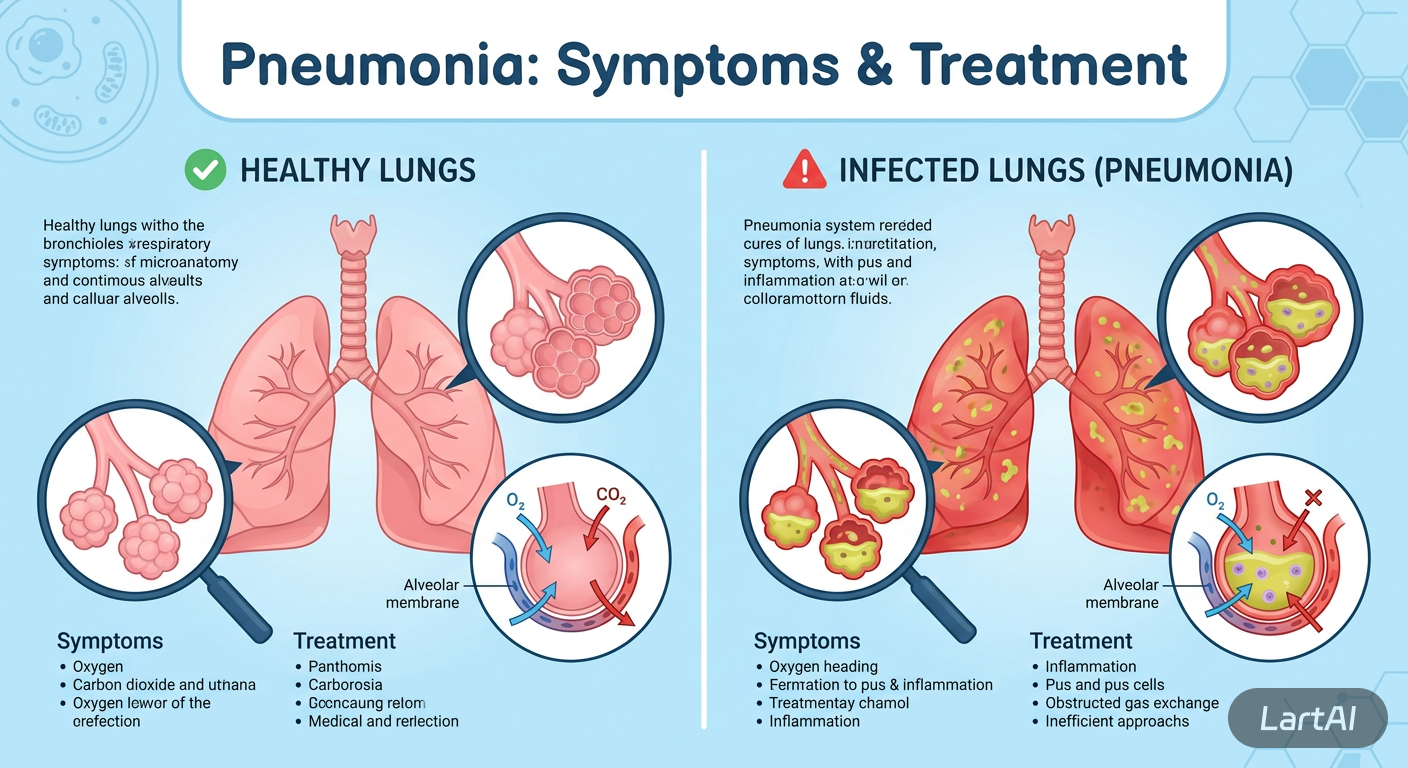
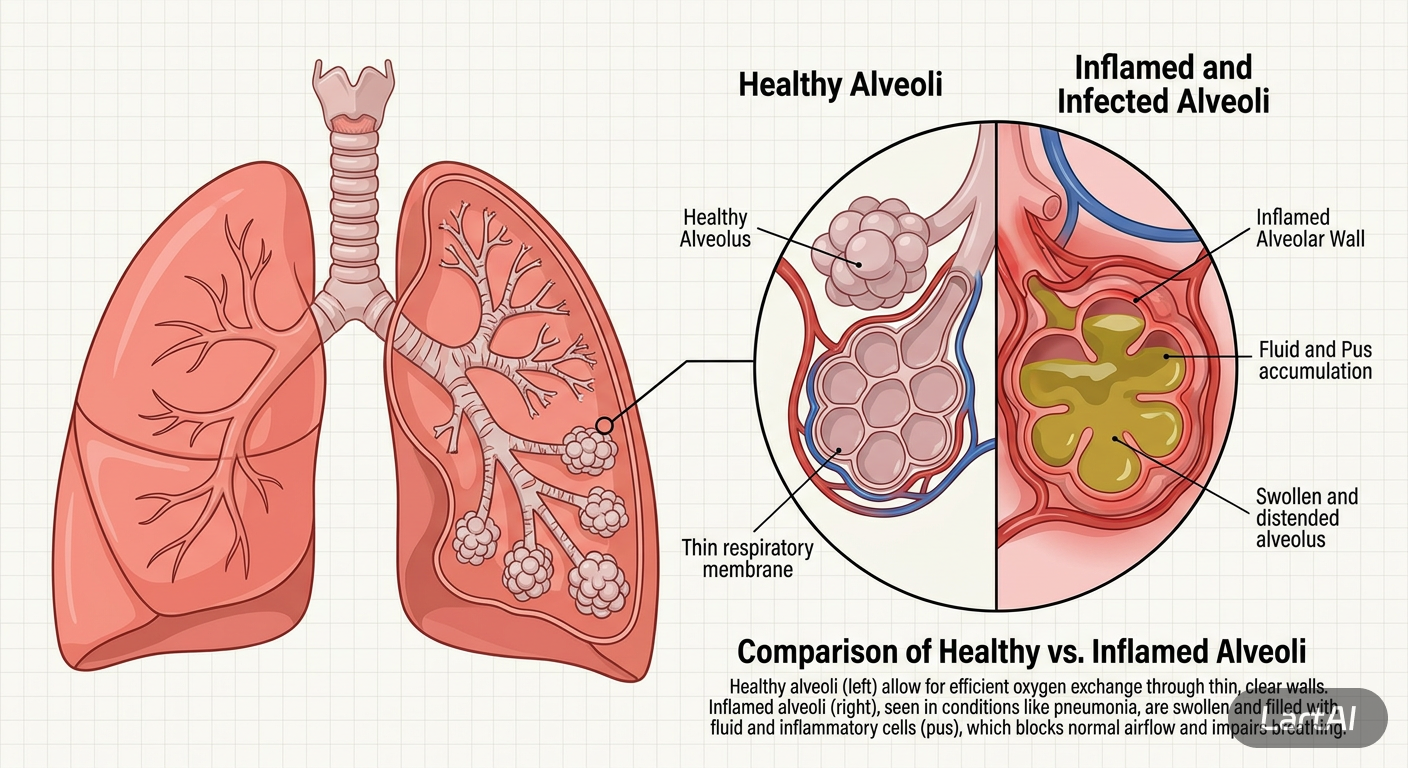
Pneumonia is an infection that affects one or both lungs. During the infection, the tiny air sacs (called alveoli) become swollen and fill with fluid or pus. Because of this, the lungs cannot work properly, making it difficult for the body to get enough oxygen.
Pneumonia may develop after a cold or flu, but it can also occur on its own. The illness can range from mild to severe depending on the person’s age, overall health, and the type of germ causing the infection.
Causes of Pneumonia
Pneumonia can be caused by different types of germs.
1. Bacterial Pneumonia
This is the most common type in adults. It is caused by bacteria and usually requires antibiotics.
2. Viral Pneumonia
Viruses such as the flu virus or coronavirus can cause pneumonia. Viral pneumonia is often milder but can become serious in some people.
3. Fungal Pneumonia
This type is less common and usually affects people with weakened immune systems.
Symptoms of Pneumonia
Pneumonia symptoms may appear suddenly or develop slowly. They can range from mild to severe.
1. Cough
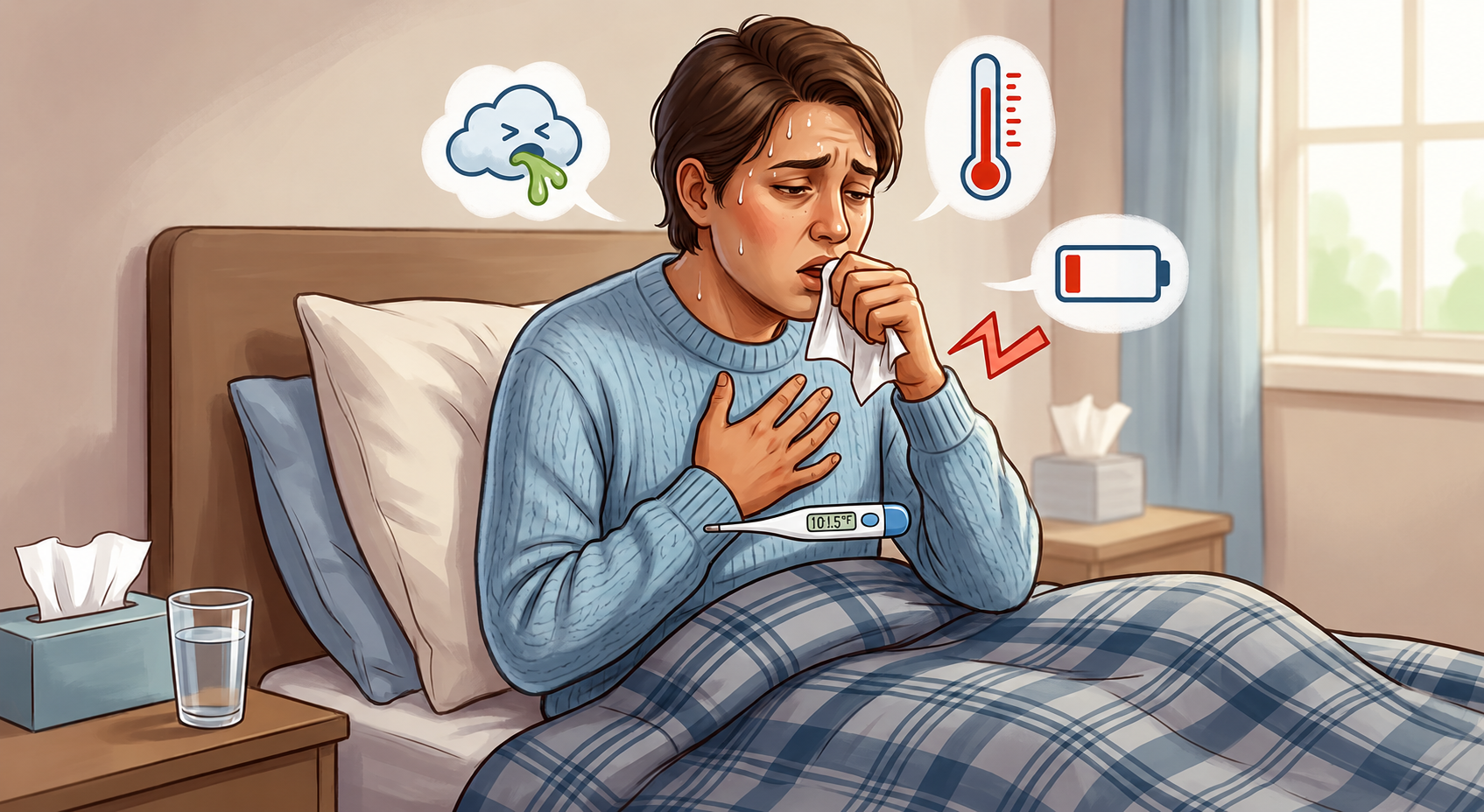
A cough is the most common symptom. It may produce yellow, green, or bloody mucus.
2. Fever
Most people with pneumonia develop a high fever along with chills and sweating.
3. Shortness of Breath
Breathing may become difficult, especially during physical activity.
4. Chest Pain
You may feel sharp pain in your chest while breathing deeply or coughing.
5. Tiredness
Pneumonia often causes weakness, tiredness, and low energy.
6. Fast Breathing
Some people breathe faster than normal because the lungs are not working properly.
7. Chills
You may experience shaking chills along with a fever.
8. Loss of Appetite
Many people lose their appetite during the illness.
9. Confusion
Older adults may become confused or less alert instead of developing a high fever.
When to See a Doctor ?
You should visit a doctor if you have:
- A cough lasting more than a few days
- High fever
- Difficulty breathing
- Chest pain
- Cough with thick or bloody mucus
- Symptoms that become worse instead of better
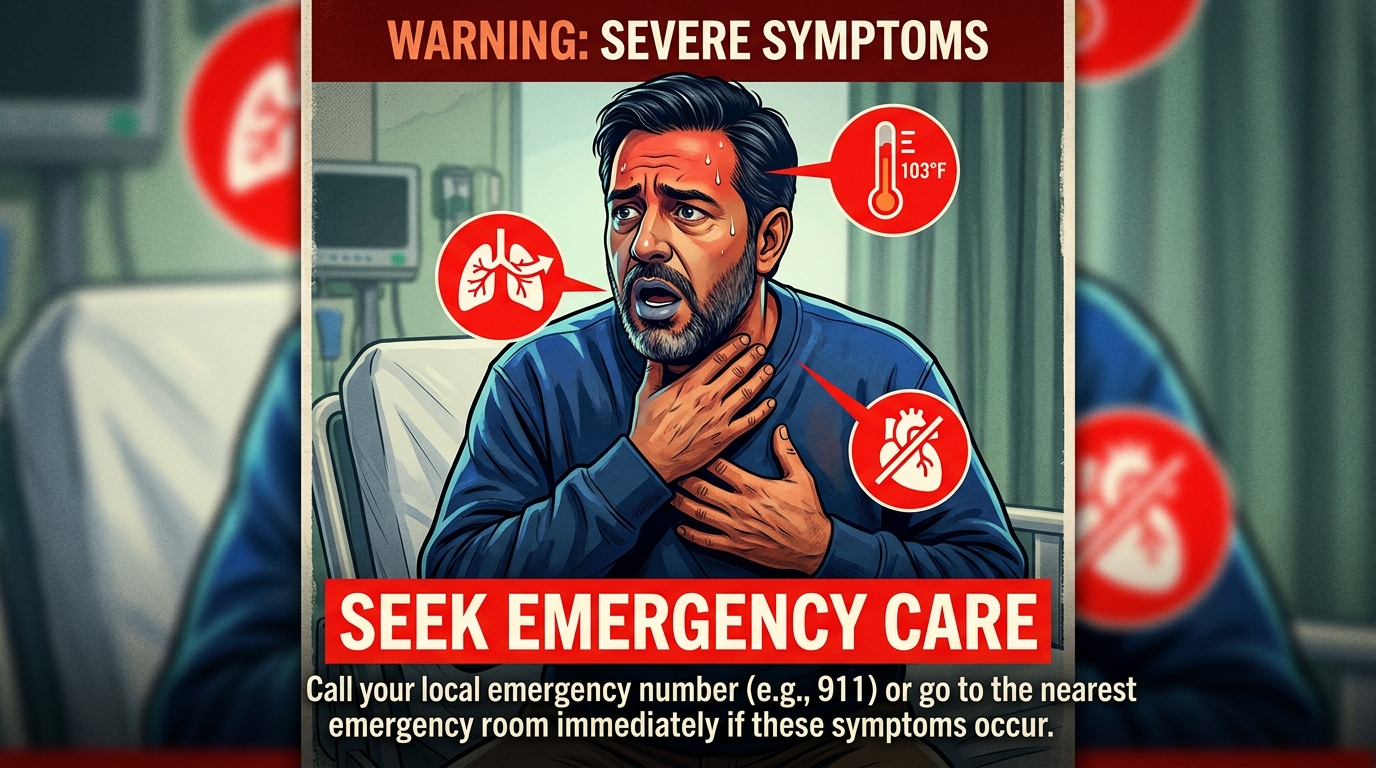
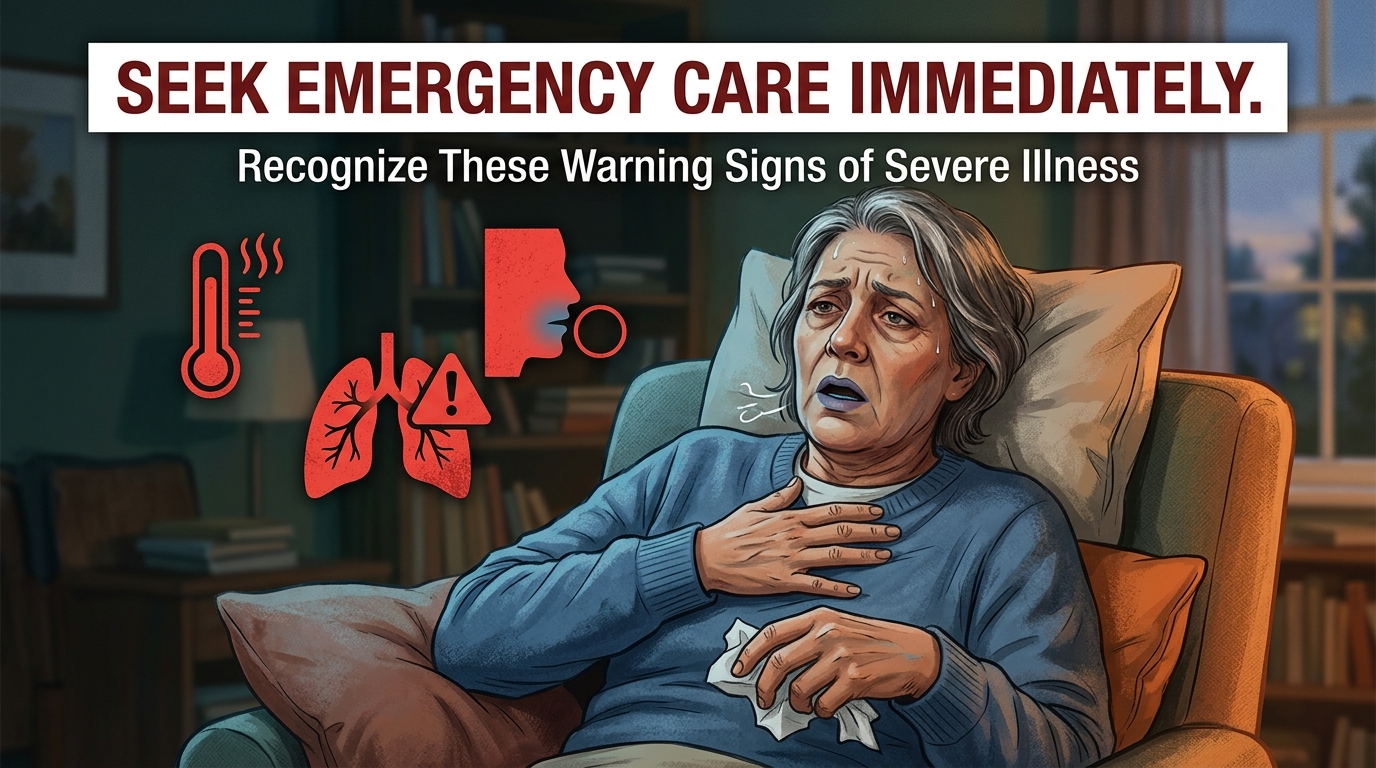
Seek emergency medical care immediately if you:
- Cannot breathe properly
- Have blue lips or fingertips
- Feel severe chest pain
- Become confused or unconscious
- Have a very high fever that does not improve
How is Pneumonia Diagnosed ?
Doctors diagnose pneumonia by:
- Asking about your symptoms
- Listening to your lungs with a stethoscope
- Checking your oxygen level
- Taking a chest X-ray
- Doing blood tests if needed
- Testing mucus samples in some cases
These tests help identify the cause and decide the best treatment.

Pneumonia Treatment
Treatment depends on what caused the infection and how severe it is.
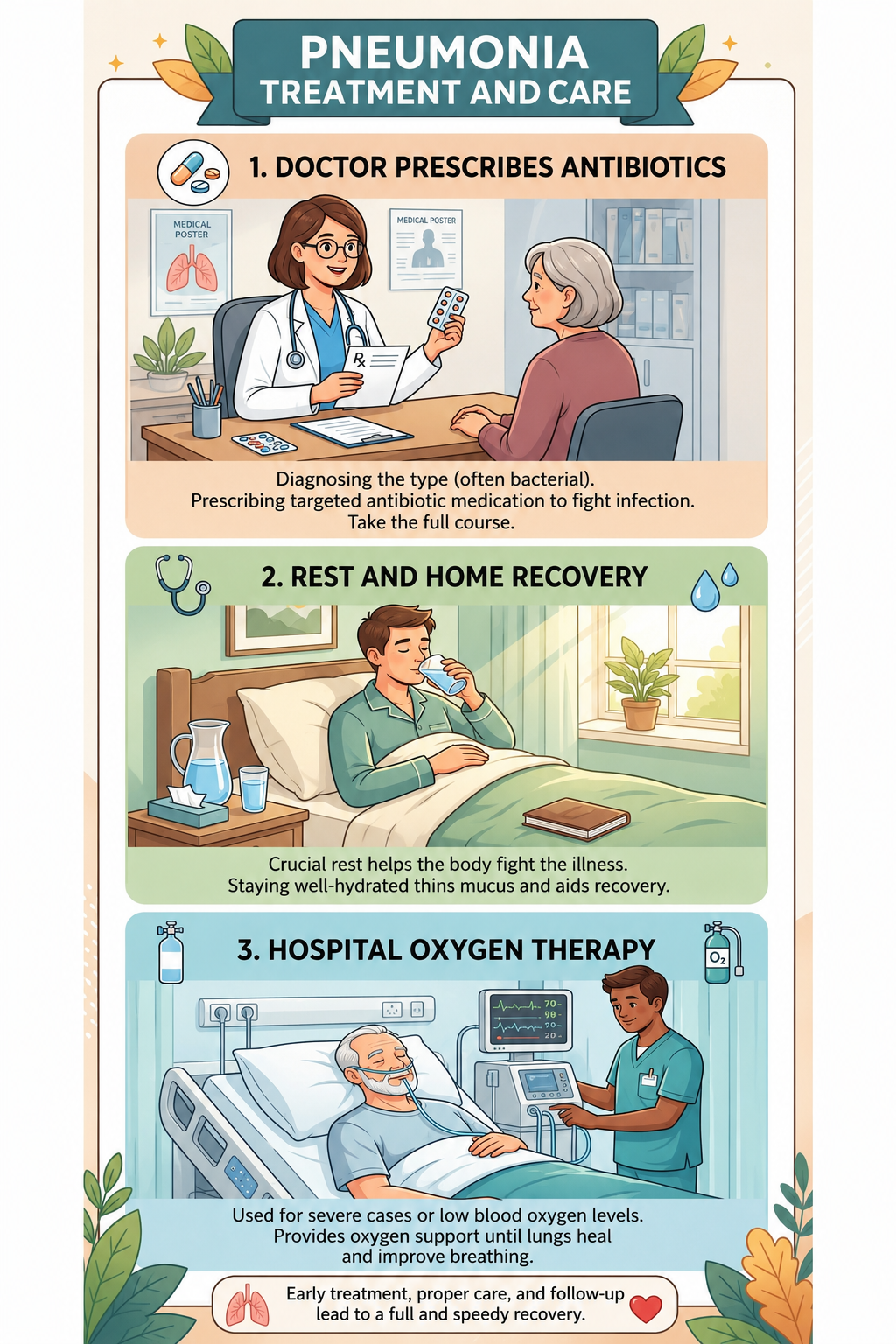
1. Antibiotics
If bacteria cause pneumonia, doctors prescribe antibiotics. It is important to finish the entire course, even if you start feeling better.
2. Antiviral Medicines
If a virus causes pneumonia, antiviral medicine may be recommended in some cases. Mild viral pneumonia often improves with rest and supportive care.
3. Fever and Pain Medicines
Medicines such as paracetamol or ibuprofen can help reduce fever, body pain, and discomfort.
4. Cough Medicine
Your doctor may recommend cough medicine if your cough is severe. However, coughing helps clear mucus from the lungs, so it should not always be stopped.
5. Oxygen Therapy
People with severe pneumonia may need oxygen therapy in the hospital to help them breathe more easily.
Hospital Treatment
Some patients may need hospital care if they:
- Have severe breathing problems
- Have low oxygen levels
- Are elderly
- Have serious medical conditions
- Become dehydrated
In the hospital, patients may receive oxygen, intravenous (IV) fluids, antibiotics, and close monitoring.
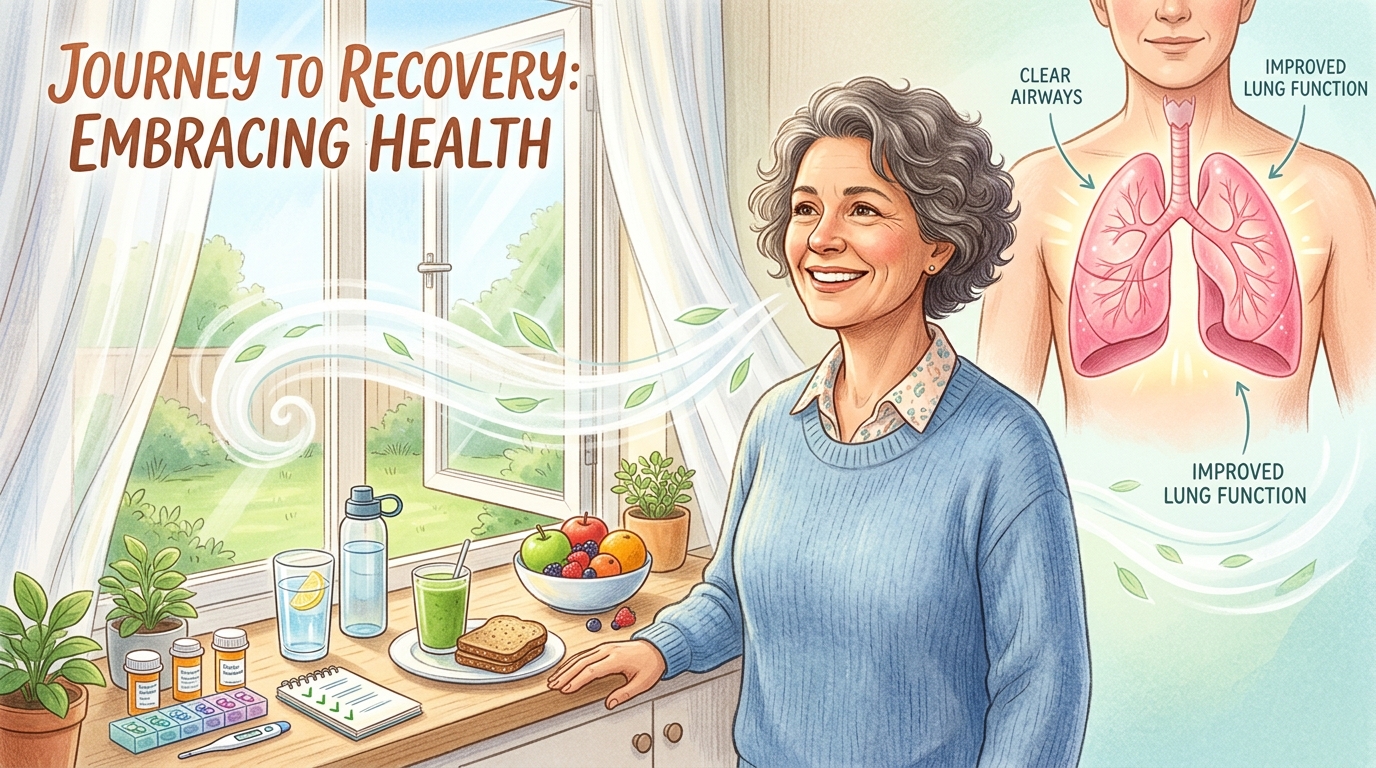
Home Care
People with mild pneumonia can recover at home by:
- Taking medicines exactly as prescribed
- Drinking plenty of water
- Getting enough rest
- Eating healthy foods
- Avoiding smoking
- Avoiding alcohol
- Following the doctor’s instructions
Recovery may take several weeks depending on the severity of the illness.
How to Prevent Pneumonia ?
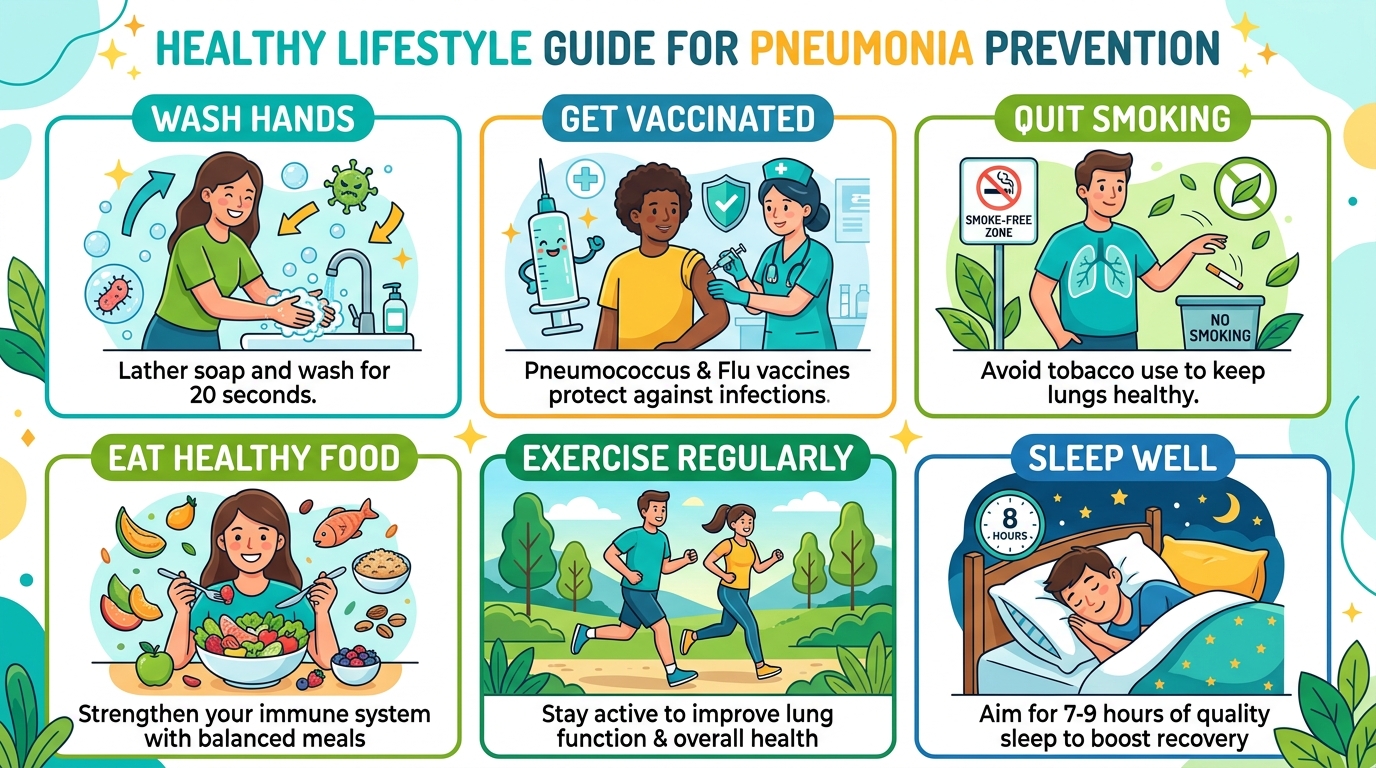
You can lower your risk of pneumonia by following these simple steps:
- Wash your hands regularly.
- Get recommended vaccines, including the flu and pneumonia vaccines.
- Avoid smoking.
- Eat healthy foods.
- Exercise regularly.
- Get enough sleep.
- Cover your mouth when coughing or sneezing.
- Stay away from people who are sick whenever possible.
- Manage chronic diseases like asthma or diabetes properly.
Possible Complications
If pneumonia is not treated, it can lead to serious health problems such as:
- Difficulty breathing
- Lung abscess
- Fluid around the lungs
- Blood infection (sepsis)
- Respiratory failure
- Hospitalization
Early treatment greatly reduces the risk of these complications.
Living with Pneumonia
Most people recover completely with proper treatment. During recovery, it is important to rest, drink enough fluids, and take all medicines as directed. Even after the infection improves, you may feel tired for several weeks. Do not stop your medicines without consulting your doctor, and attend follow-up appointments if advised.
Conclusion
Pneumonia is a serious lung infection that can affect people of all ages. Common symptoms include cough, fever, chest pain, tiredness, and difficulty breathing. The condition may be caused by bacteria, viruses, or fungi. Early diagnosis and proper treatment are important for a full recovery.