

Introduction
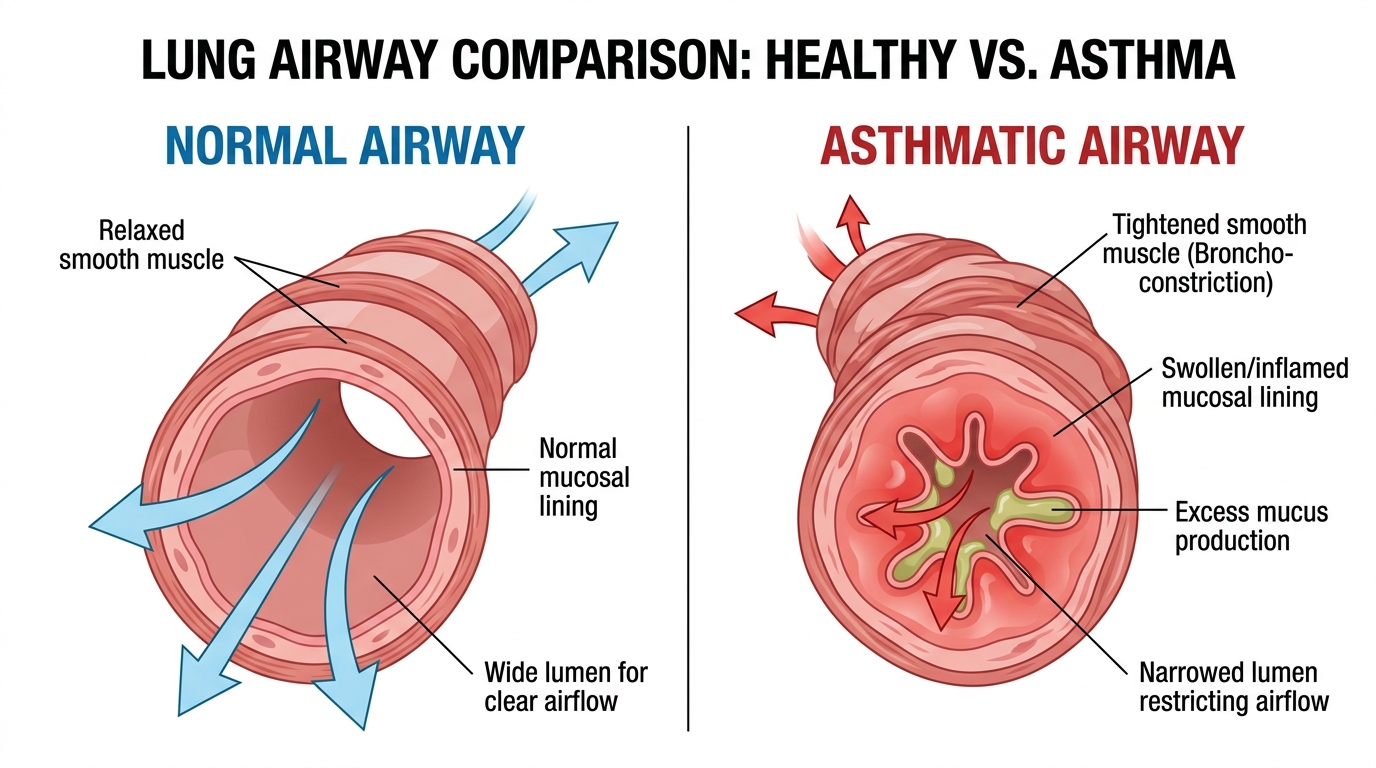
Asthma is a common long-term disease that affects the lungs and makes breathing difficult. It happens when the airways become swollen, narrow, and produce extra mucus. This can make it hard for air to move in and out of the lungs. Asthma can affect people of all ages, including children and adults.
Although asthma cannot be completely cured, it can be controlled with proper treatment, healthy habits, and regular medical care. Many people with asthma live normal, active lives by following their doctor’s advice.
What is Asthma ?
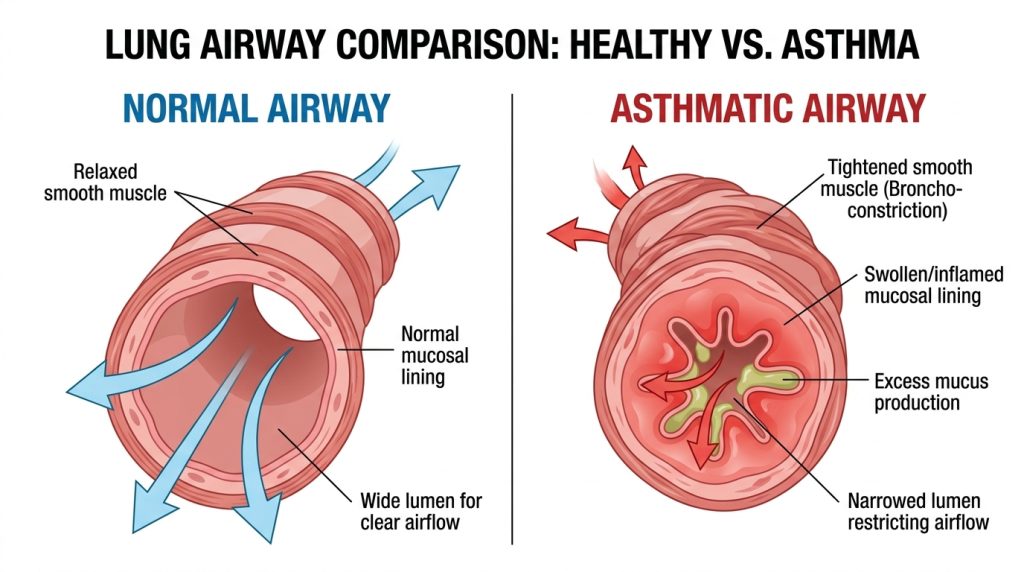
Asthma is a long-term condition that affects the lungs. During an asthma attack, the airways become swollen, the muscles around them tighten, and extra mucus is produced. This makes it difficult to breathe.
Many things can trigger asthma, such as:
- Dust
- Pollen
- Smoke
- Air pollution
- Pet hair
- Cold air
- Strong smells or perfumes
- Exercise
- Stress
- Cold and flu infections
Symptoms of Asthma
The symptoms of asthma can be different for each person. Some people have mild symptoms, while others may have severe asthma attacks.
1. Shortness of Breath
You may find it difficult to breathe, especially during exercise or at night.
2. Wheezing
A whistling sound can be heard when breathing, especially while breathing out.
3. Coughing
A cough that is worse at night, early in the morning, or after exercise.
4. Chest Tightness
You may feel pressure or tightness in your chest.
5. Fast Breathing
Breathing may become quicker than normal during an asthma attack.
6. Trouble Sleeping
Night-time coughing or breathing problems can make it hard to sleep.
7. Feeling Tired
Because your body gets less oxygen, you may feel weak or tired.
8. Frequent Asthma Attacks
Without proper treatment, asthma attacks may happen more often.
When to See a Doctor ?
Visit a doctor if you have:
- Frequent coughing or wheezing
- Difficulty breathing
- Chest tightness
- Symptoms that disturb your sleep
- An inhaler that does not improve your breathing
- Frequent asthma attacks
Get emergency medical help immediately if:
- You cannot speak because of breathing problems.
- Your lips or fingernails turn blue.
- You have severe difficulty breathing.
- Your rescue inhaler does not work.
Asthma Treatment
The main goal of asthma treatment is to control symptoms and prevent asthma attacks.
1. Rescue Inhaler
A rescue inhaler gives quick relief during an asthma attack. It helps open the airways so you can breathe more easily. Always keep it with you if your doctor recommends it.
2. Daily Controller Medicine
Some people need medicine every day to reduce swelling in the airways. These medicines help prevent asthma attacks and improve breathing over time.
3. Steroid Inhalers
Steroid inhalers reduce inflammation in the lungs. They help control asthma but do not work immediately during an asthma attack.
4. Combination Inhalers
These inhalers contain two medicines:
- One reduces swelling.
- The other keeps the airways open for a longer time.
They are often used for moderate or severe asthma.
5. Allergy Treatment
If allergies cause your asthma, your doctor may suggest:
- Allergy medicine
- Nasal spray
- Allergy shots
Treating allergies can help reduce asthma symptoms.
6. Oxygen Therapy
People with severe asthma attacks may need oxygen treatment in the hospital to help them breathe.
7. Healthy Lifestyle
Healthy habits can help control asthma.
- Do not smoke.
- Avoid dust and smoke.
- Keep your home clean.
- Eat healthy food.
- Exercise regularly if your doctor says it is safe.
- Drink plenty of water.
- Get enough sleep.
- Reduce stress.
How to Prevent Asthma Attacks
You can reduce asthma attacks by:
- Taking your medicine regularly.
- Carrying your rescue inhaler.
- Staying away from dust, smoke, and other triggers.
- Wearing a mask in polluted or dusty places.
- Washing your hands to prevent infections.
- Getting regular health checkups.
- Following your doctor’s advice.
Possible Complications
If asthma is not treated properly, it can cause:
- Frequent asthma attacks
- Lung infections
- Poor sleep
- Difficulty doing daily activities
- Emergency hospital visits
- Permanent damage to the airways in severe cases
Living with Asthma
People with asthma can live a healthy and active life by taking their medicines, avoiding triggers, exercising safely, and visiting their doctor regularly. Good asthma management helps prevent serious attacks and improves quality of life.
Conclusion
Asthma is a common lung disease that makes breathing difficult, but it can be controlled with proper treatment and healthy habits. Knowing the symptoms, avoiding triggers, and taking medicines as prescribed can help prevent asthma attacks. If you have breathing problems or frequent asthma symptoms, see a doctor for the right diagnosis and treatment. With proper care, people with asthma can enjoy a healthy and active life.
THE END..
