

Introduction
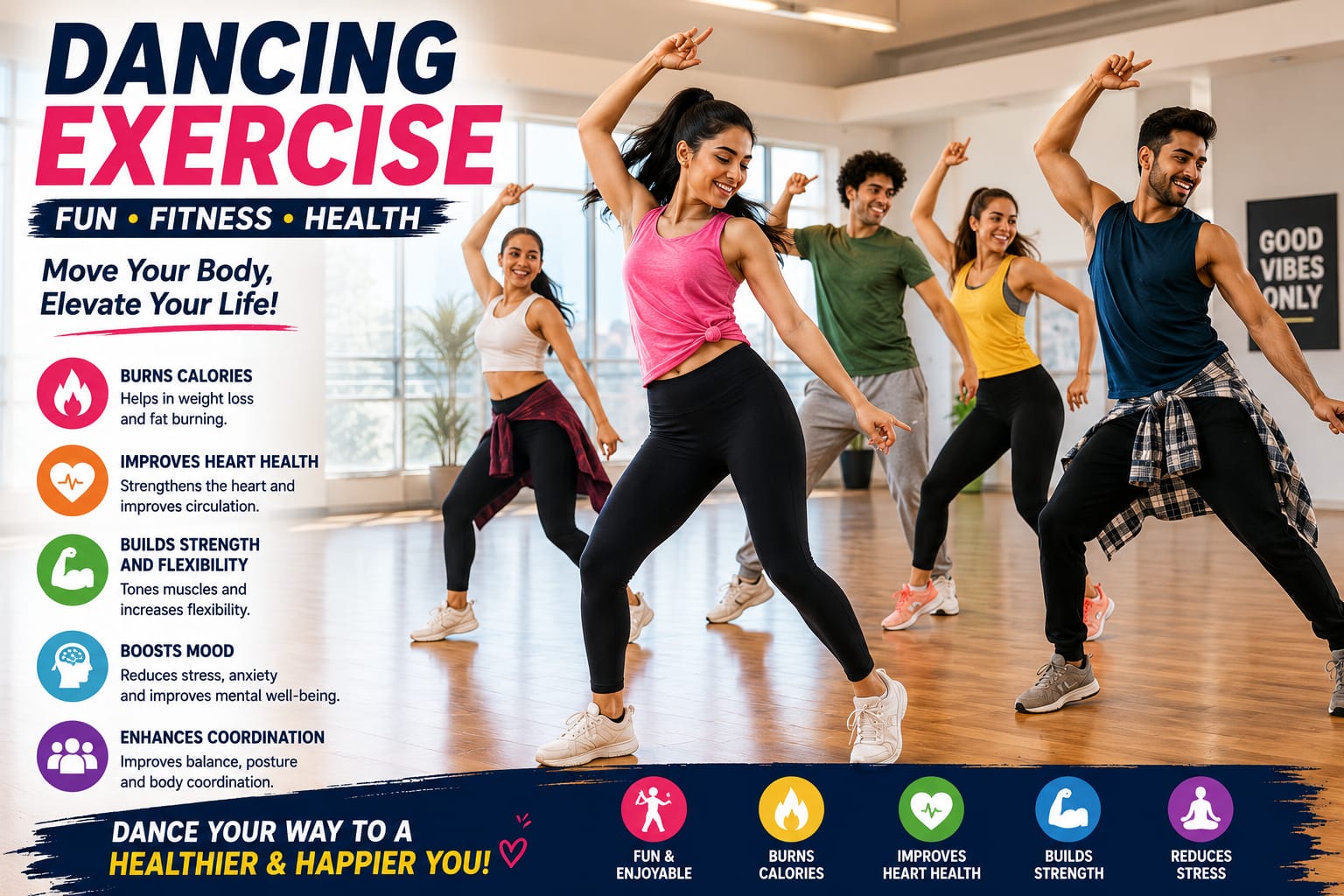
Exercise is an essential part of a healthy lifestyle, and dancing is one of the most enjoyable forms of physical activity. Unlike many traditional workouts, dancing combines fitness with music, rhythm, and creativity. It is suitable for people of all ages and fitness levels, making it an excellent choice for anyone looking to improve their health while having fun. Whether performed professionally, socially, or simply at home, dancing offers numerous physical, mental, and emotional benefits.
What is Dancing Exercise?
Dancing exercise is a form of physical activity that involves moving the body rhythmically to music. It combines aerobic movement, flexibility, coordination, and balance. Dancing can be done individually, with a partner, or in a group. Popular styles include hip-hop, Zumba, salsa, ballroom, jazz, contemporary, folk dance, and freestyle dancing.
Because dancing keeps the body constantly moving, it raises the heart rate, burns calories, and strengthens muscles while providing entertainment. Many people enjoy dancing because it feels less like exercise and more like a fun activity.
Benefits of Dancing Exercise
1. Helps with Weight Loss
Dancing is an effective way to burn calories. Depending on the intensity and duration, a person can burn between 200 and 600 calories in one hour. Regular dancing, combined with a balanced diet, can help reduce body fat and maintain a healthy weight.
2. Improves Heart Health
Dancing is an excellent cardiovascular exercise. It increases the heart rate, improves blood circulation, and strengthens the heart muscles. Regular dancing lowers the risk of heart disease, high blood pressure, and stroke.
3. Builds Muscle Strength
Many dance movements require the use of leg, core, back, and arm muscles. Repeated practice strengthens these muscles, improves endurance, and enhances overall body fitness.
4. Increases Flexibility and Balance
Stretching, turning, bending, and jumping improve flexibility and joint mobility. Dancing also develops balance and coordination, reducing the risk of falls and injuries.
5. Boosts Mental Health
Dancing releases endorphins, often called “feel-good hormones.” These hormones help reduce stress, anxiety, and depression while improving mood and emotional well-being. Dancing also increases self-confidence and self-expression.
6. Improves Brain Function
Learning dance routines requires concentration, memory, and coordination. This mental challenge improves brain function, memory, and problem-solving skills while keeping the mind active.
7. Enhances Social Skills
Group dance classes provide opportunities to meet new people, build friendships, and improve communication skills. Dancing encourages teamwork and creates a positive social environment.
Popular Types of Dancing Exercise
There are many forms of dance that can be used for fitness, including:
– Zumba: A high-energy workout combining Latin and international music.
– Hip-Hop Dance: Fast-paced movements that improve stamina and coordination.
– Salsa: A partner dance that enhances flexibility and rhythm.
– Ballroom Dance: Improves posture, balance, and teamwork.
– Jazz Dance: Strengthens muscles while improving flexibility.
– Freestyle Dance: Allows individuals to move creatively without fixed rules.
– Traditional Folk Dance: Combines cultural expression with physical activity.
How to Start Dancing Exercise
Starting a dance workout is simple:
– Choose a dance style that matches your interests.
– Wear comfortable clothing and supportive shoes.
– Begin with a 5–10 minute warm-up.
– Dance for 30–60 minutes at least three to five days per week.
– Stay hydrated before, during, and after dancing.
– Finish with stretching exercises to relax the muscles.
Beginners should start slowly and gradually increase the intensity as their fitness improves.
Safety Tips
To avoid injuries while dancing:
– Warm up before every session.
– Use proper footwear.
– Dance on a safe, non-slippery surface.
– Maintain good posture.
– Listen to your body and rest when needed.
– Avoid overtraining.
– Drink enough water throughout the workout.
Dancing Exercise and Weight Loss
For people aiming to lose weight, dancing is one of the most enjoyable fitness activities. It burns calories, increases metabolism, and improves endurance. High-energy dance styles such as Zumba, hip-hop, and aerobic dance are especially effective for fat burning.
To achieve the best results:
– Exercise regularly.
– Eat a balanced diet rich in fruits, vegetables, lean protein, and whole grains.
– Limit sugary drinks and processed foods.
– Stay consistent and monitor your progress.
Conclusion
Dancing exercise is much more than entertainment. It is a complete body workout that improves physical fitness, mental health, flexibility, balance, and overall well-being. It helps with weight management, strengthens the heart and muscles, and provides an enjoyable way to stay active. Unlike many forms of exercise, dancing keeps people motivated because it combines movement with music and fun. By making dancing a regular part of your lifestyle, you can enjoy better health, greater confidence, and a happier life.