Introduction
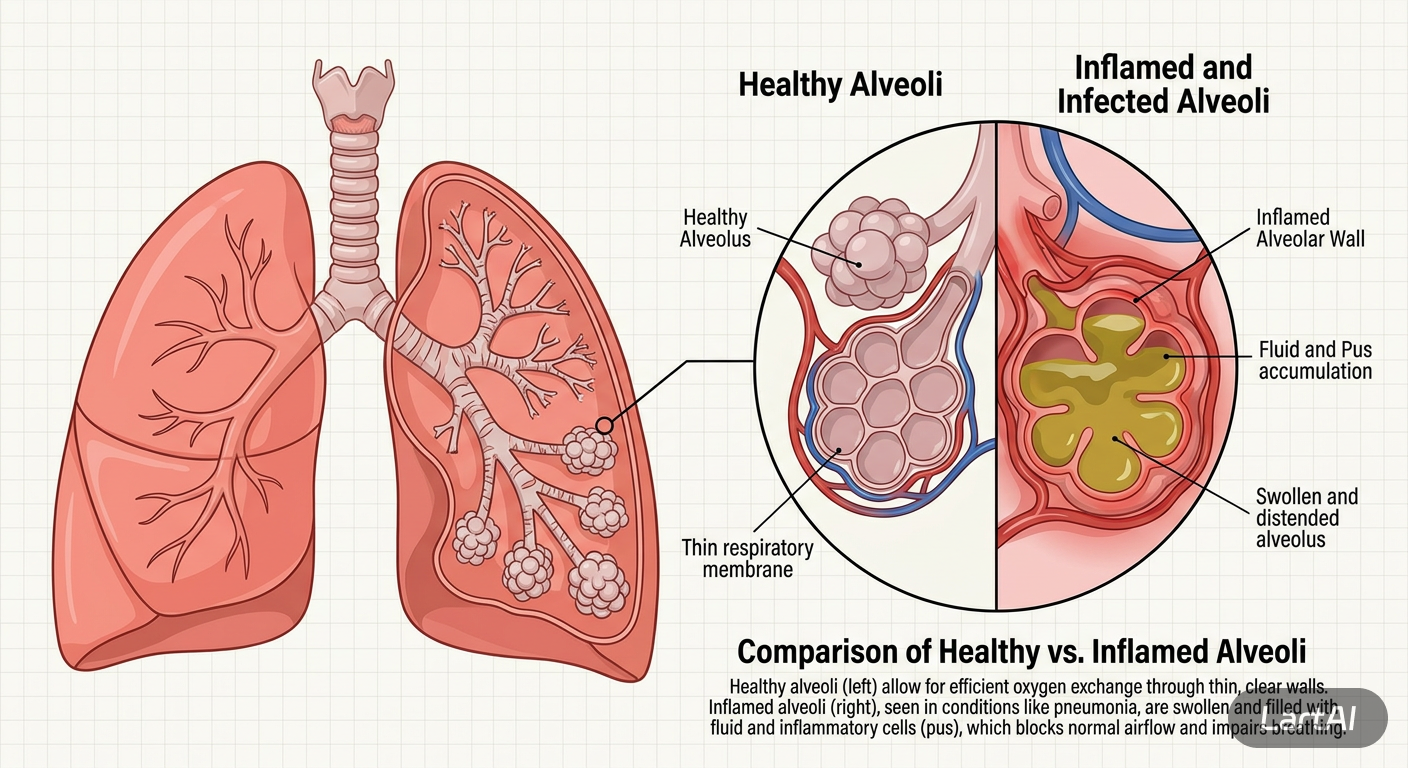
Pneumonia is a common respiratory infection that causes inflammation of one or both lungs. The infection primarily affects the tiny air sacs in the lungs, called alveoli, which may fill with fluid or pus, making it difficult to breathe. Pneumonia can be caused by bacteria, viruses, fungi, or, less commonly, parasites. It ranges from mild to life-threatening, particularly in infants, older adults, people with weakened immune systems, and individuals with chronic diseases.Early and accurate diagnosis of pneumonia is essential because prompt treatment can prevent serious complications such as respiratory failure, sepsis, or lung abscesses. Since pneumonia symptoms often resemble those of the common cold, influenza, bronchitis, or COVID-19, healthcare providers use a combination of medical history, physical examination, laboratory tests, imaging studies, and microbiological tests to confirm the diagnosis and determine the underlying cause.
Why Pneumonia Testing Is Important?
Pneumonia testing plays a vital role in identifying the infection and determining the most appropriate treatment. Proper diagnosis helps healthcare providers:
- Confirm whether the symptoms are caused by pneumonia.
- Identify the type of organism causing the infection.
- Determine the severity of the disease.
- Decide whether hospitalization is necessary.
- Select the most effective antibiotics or antiviral medications.
- Monitor the patient’s recovery and detect complications.
Early diagnosis significantly improves treatment outcomes and reduces the risk of severe illness.
1. Medical History Assessment
The first step in diagnosing pneumonia is obtaining a detailed medical history. A healthcare provider asks about the patient’s symptoms, recent illnesses, and potential risk factors.
Common questions include:
- When did your symptoms begin?
- Do you have a fever or chills?
- Are you experiencing a cough? If yes, is it producing mucus?
- What color is the mucus?
- Are you experiencing chest pain when breathing or coughing?
- Do you have difficulty breathing?
- Have you recently had influenza, COVID-19, or another respiratory infection?
- Do you smoke or have chronic lung disease?
- Have you been hospitalized recently?
The healthcare provider also reviews the patient’s age, vaccination history, medical conditions, medications, and immune status.
2. Physical Examination
A physical examination provides important clues that suggest pneumonia.
During the examination, the healthcare provider may:
- Measure body temperature.
- Check heart rate and breathing rate.
- Measure blood pressure.
- Assess oxygen saturation using a pulse oximeter.
- Listen to the lungs with a stethoscope.
Abnormal lung sounds may include:
- Crackles (rales)
- Wheezing
- Reduced breath sounds
- Bronchial breathing sounds
The provider also looks for signs such as rapid breathing, bluish lips or fingertips, and increased effort while breathing.
3. Chest X-ray
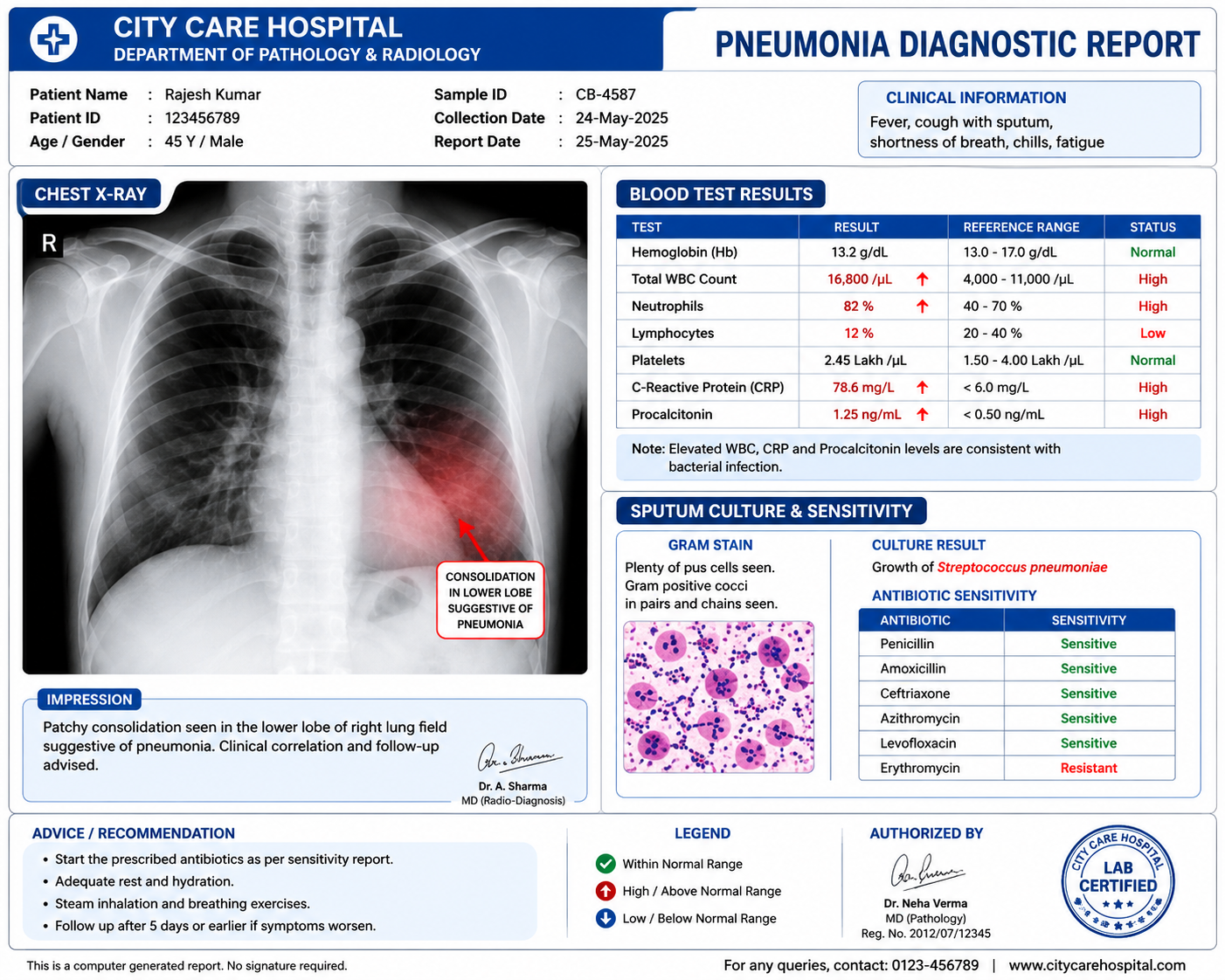
A chest X-ray is the most commonly used imaging test for diagnosing pneumonia.
Procedure
The patient stands or lies in front of an X-ray machine while images of the chest are taken from one or more angles.
Purpose
Chest X-rays help healthcare providers:
- Confirm the presence of pneumonia.
- Identify the affected area of the lungs.
- Determine whether one or both lungs are involved.
- Detect complications such as pleural effusion (fluid around the lungs) or lung abscesses.
In many cases, pneumonia appears as white patches or areas of increased density on the X-ray image.
4. Pulse Oximetry
Pulse oximetry is a simple, painless test used to measure the oxygen level in the blood.
Procedure
A small clip-like sensor is placed on the patient’s fingertip or earlobe.
Purpose
The test measures oxygen saturation (SpO₂).
Low oxygen levels may indicate that pneumonia is interfering with normal lung function and may suggest the need for oxygen therapy or hospitalization.
5. Blood Tests
Blood tests help evaluate the severity of infection and identify its possible cause.
Complete Blood Count (CBC)
A CBC measures different types of blood cells.
- High white blood cell counts often suggest a bacterial infection.
- Low white blood cell counts may occur in severe infections or viral illnesses.
C-Reactive Protein (CRP)
CRP is an inflammatory marker.
Elevated CRP levels indicate significant inflammation within the body.
Procalcitonin Test
Procalcitonin levels often increase during bacterial infections.
This test helps healthcare providers distinguish bacterial pneumonia from viral pneumonia and guides antibiotic use.
6. Sputum Examination
A sputum sample is collected from mucus that the patient coughs up from the lungs.
Laboratory Analysis
The sample undergoes:
- Gram stain
- Microscopic examination
- Bacterial culture
- Antibiotic sensitivity testing
Purpose
The test identifies the specific bacteria causing pneumonia and helps determine which antibiotics are most effective.
7. Blood Culture
Blood cultures are usually performed in patients with severe pneumonia or suspected bloodstream infection.
Procedure
A blood sample is collected under sterile conditions and sent to the laboratory.
Purpose
Blood cultures detect bacteria or fungi that have entered the bloodstream.
Positive blood cultures indicate a more serious infection requiring aggressive treatment.
8. Chest CT Scan
A computed tomography (CT) scan provides much more detailed images than a standard chest X-ray.
When It Is Used
Healthcare providers may recommend a CT scan if:
- Chest X-ray findings are unclear.
- Symptoms are severe.
- Pneumonia does not improve with treatment.
- Complications are suspected.
CT scans can detect small infections, lung abscesses, tumors, or fluid collections more accurately than X-rays.
9. Bronchoscopy
Bronchoscopy is performed when the cause of pneumonia remains uncertain or when severe pneumonia does not respond to treatment.
Procedure
A thin, flexible tube with a camera is gently inserted through the nose or mouth into the lungs.
The healthcare provider can:
- Examine the airways.
- Collect fluid samples.
- Obtain tissue samples if necessary.
Bronchoscopy is particularly useful for immunocompromised patients or when unusual infections are suspected.
10. Molecular and Viral Tests
Modern diagnostic techniques allow rapid detection of viruses and certain bacteria.
Common tests include:
- PCR (Polymerase Chain Reaction)
- Rapid influenza test
- COVID-19 test
- Respiratory virus panels
These tests identify viral causes of pneumonia quickly and help guide treatment decisions.
Pneumonia Testing in Children….
Diagnosing pneumonia in children may require a slightly different approach because younger children may not clearly describe their symptoms.
Healthcare providers evaluate:
- Fever
- Rapid breathing
- Chest indrawing (retractions)
- Poor feeding
- Persistent cough
- Oxygen saturation
Chest X-rays and blood tests may be performed in moderate to severe cases, while mild cases can often be diagnosed based on symptoms and physical examination.
Who Should Be Tested?
Pneumonia testing is recommended for individuals who experience:
- Persistent cough lasting several days
- High fever
- Chills
- Shortness of breath
- Chest pain while breathing
- Thick yellow, green, or bloody mucus
- Fatigue or weakness
- Low oxygen levels
Older adults, infants, pregnant women, and individuals with chronic medical conditions should seek medical evaluation promptly if these symptoms occur.
Preparing for Pneumonia Tests
Most pneumonia tests require little preparation.
Patients may be advised to:
- Wear comfortable clothing for chest imaging.
- Inform the healthcare provider about current medications.
- Stay hydrated before providing a sputum sample.
- Follow any fasting instructions if sedation is needed for bronchoscopy
Conclusion!!!
Pneumonia testing is essential for confirming the diagnosis, identifying the cause of infection, assessing disease severity, and selecting the most effective treatment. Healthcare providers typically use a combination of medical history, physical examination, chest X-rays, blood tests, pulse oximetry, sputum analysis, and microbiological tests to evaluate patients with suspected pneumonia. In more complex cases, advanced investigations such as CT scans, bronchoscopy, and molecular diagnostic tests may be required.
Early diagnosis and timely treatment significantly improve recovery, reduce complications, and lower the risk of hospitalization or death. Anyone experiencing persistent cough, fever, chest pain, or difficulty breathing should seek prompt medical attention. Regular follow-up and adherence to the prescribed treatment plan are important for complete recovery and maintaining long-term lung health.