

Introduction
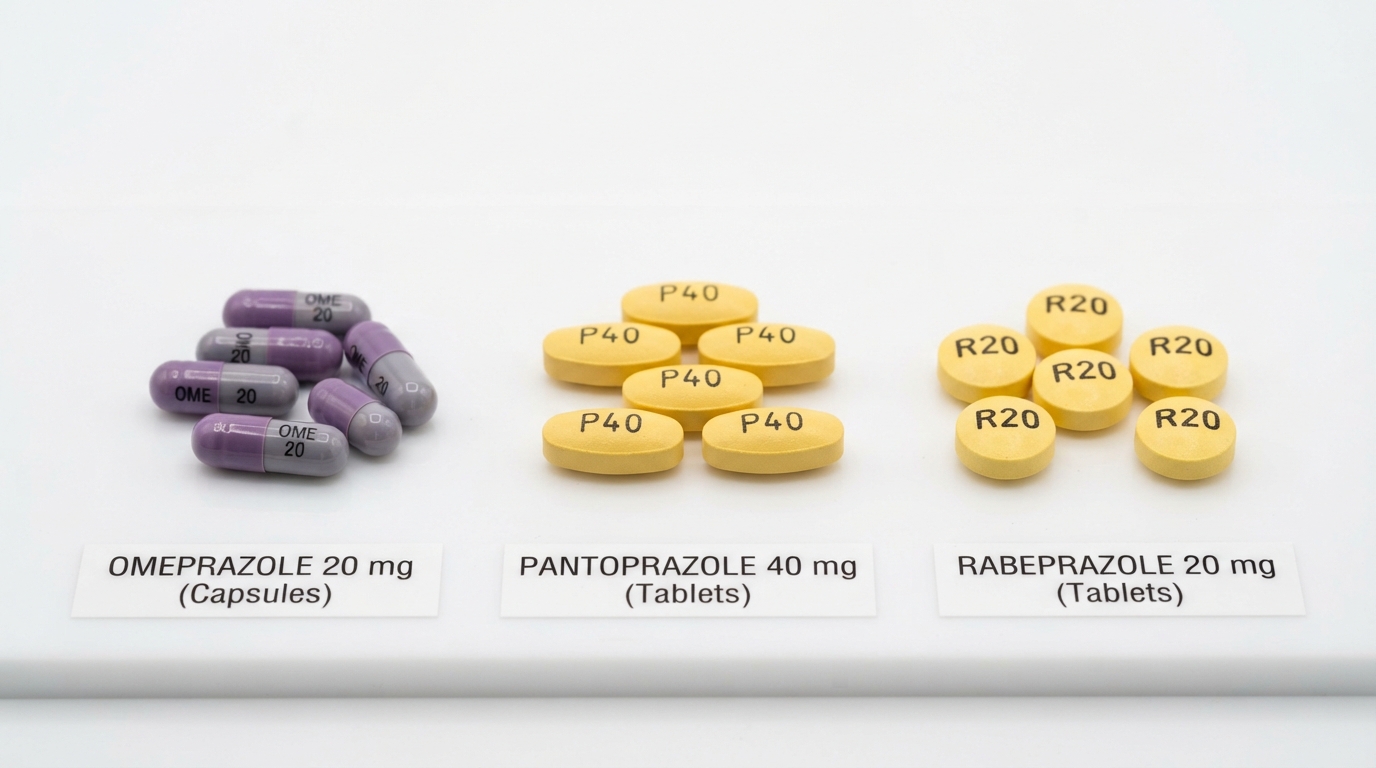
Omeprazole, Pantoprazole, and Rabeprazole are medicines known as Proton Pump Inhibitors (PPIs). They are commonly prescribed to reduce the amount of acid produced in the stomach. These medicines are among the most effective treatments for conditions caused by excess stomach acid, such as acid reflux, heartburn, stomach ulcers, and gastroesophageal reflux disease (GERD).
Millions of people worldwide use these medicines every year because they provide long-lasting relief from acid-related symptoms and help heal damage to the stomach and esophagus. Although these medicines belong to the same drug class and work in a similar way, they differ slightly in their onset of action, duration, drug interactions, and cost.
This article explains everything you need to know about Omeprazole, Pantoprazole, and Rabeprazole, including their uses, benefits, side effects, dosage, precautions, and comparisons.
What Are Proton Pump Inhibitors (PPIs)?
Proton Pump Inhibitors are medicines that block the stomach’s acid-producing pumps, called proton pumps.
Normally, the stomach produces acid to help digest food. However, too much stomach acid can cause problems such as:
- Heartburn
- Acid reflux
- Stomach ulcers
- Duodenal ulcers
- GERD
- Gastritis
PPIs reduce acid production, allowing the stomach and esophagus to heal naturally.
How Do These Medicines Work?
Inside the stomach lining are tiny cells that produce acid.
Omeprazole, Pantoprazole, and Rabeprazole stop these cells from releasing acid by blocking the H+/K+ ATPase enzyme, commonly called the proton pump.
As a result:
- Less acid is produced.
- Ulcers heal faster.
- Heartburn decreases.
- Acid reflux improves.
- The esophagus gets time to heal.
These medicines do not provide instant relief like antacids. They usually begin working within a few hours, while their full effect develops after several days of regular use.
Uses of Omeprazole
Omeprazole is one of the oldest and most widely prescribed PPIs.
It is used to treat:
- Acid reflux (GERD)
- Heartburn
- Gastric ulcers
- Duodenal ulcers
- Zollinger-Ellison syndrome
- Gastritis
- Helicobacter pylori infection (combined with antibiotics)
- Prevention of ulcers caused by painkillers (NSAIDs)
Uses of Pantoprazole
Pantoprazole is another commonly prescribed PPI.
Doctors use it for:
- GERD
- Acid reflux
- Stomach ulcers
- Erosive esophagitis
- Gastritis
- Prevention of stress ulcers
- Zollinger-Ellison syndrome
Pantoprazole is available as tablets and intravenous (IV) injections.
Uses of Rabeprazole
Rabeprazole is known for its relatively fast acid suppression.
It is used for:
- GERD
- Acid reflux
- Peptic ulcers
- Gastritis
- H. pylori infection
- Zollinger-Ellison syndrome
Many people experience symptom improvement within the first few days of treatment.
Conditions These Medicines Treat
These PPIs are commonly prescribed for:
- Heartburn
- Acid reflux
- Gastroesophageal reflux disease (GERD)
- Stomach ulcers
- Duodenal ulcers
- Gastritis
- Esophagitis
- Barrett’s esophagus
- Zollinger-Ellison syndrome
- Prevention of ulcers from long-term NSAID use
Benefits
Omeprazole
- Reduces stomach acid effectively
- Heals ulcers
- Relieves heartburn
- Prevents acid reflux
- Widely available
- Affordable
Pantoprazole
- Long-lasting effect
- Fewer drug interactions
- Available in IV form
- Well tolerated
- Suitable for hospital use
Rabeprazole
- Fast onset of action
- Strong acid suppression
- Good symptom control
- Effective in GERD
- Often well tolerated
Common Dosages
Dosage depends on the condition being treated.
Omeprazole
- 10 mg
- 20 mg
- 40 mg
Pantoprazole
- 20 mg
- 40 mg
Rabeprazole
- 10 mg
- 20 mg
Doctors usually recommend taking these medicines 30–60 minutes before breakfast for the best results.
Common Side Effects
Most people tolerate PPIs well.
Common side effects include:
- Headache
- Nausea
- Diarrhea
- Constipation
- Stomach pain
- Bloating
- Dizziness
- Gas
These side effects are usually mild and temporary.
Serious Side Effects
Long-term use may increase the risk of:
- Vitamin B12 deficiency
- Magnesium deficiency
- Calcium deficiency
- Bone fractures
- Kidney disease
- Severe diarrhea caused by certain bacterial infections
- Stomach polyps (rare)
Seek medical attention if you experience:
- Severe abdominal pain
- Bloody stools
- Vomiting blood
- Difficulty swallowing
- Persistent vomiting
- Severe allergic reactions
Who Should Avoid These Medicines?
Consult a healthcare provider before taking PPIs if you have:
- Severe liver disease
- Kidney problems
- Osteoporosis
- Low magnesium levels
- Vitamin B12 deficiency
- Allergy to PPIs
Pregnant or breastfeeding women should use these medicines only under medical advice.
Drug Interactions
PPIs can interact with certain medicines.
Examples include:
- Blood thinners (such as warfarin)
- Certain antifungal medicines
- HIV medicines
- Iron supplements
- Methotrexate
- Clopidogrel (especially with omeprazole)
Always tell your doctor about all medicines and supplements you take.
Lifestyle Tips While Taking PPIs
For the best results:
- Eat smaller meals.
- Avoid overeating.
- Limit spicy and fatty foods.
- Reduce caffeine and alcohol intake.
- Stop smoking.
- Avoid lying down immediately after meals.
- Maintain a healthy body weight.
- Elevate the head of your bed if you have nighttime reflux.
These lifestyle changes can improve symptoms and reduce the need for long-term medication.
Comparison Table
| Feature | Omeprazole | Pantoprazole | Rabeprazole |
|---|---|---|---|
| Drug Class | Proton Pump Inhibitor | Proton Pump Inhibitor | Proton Pump Inhibitor |
| Acid Suppression | Excellent | Excellent | Excellent |
| Onset | Moderate | Moderate | Faster |
| Duration | About 24 hours | About 24 hours | About 24 hours |
| Drug Interactions | More | Fewer | Moderate |
| IV Form | Yes | Yes | Limited |
| Cost | Usually lowest | Moderate | Slightly higher |
Advantages
Omeprazole
- Widely available
- Affordable
- Highly effective
- Long clinical experience
Pantoprazole
- Fewer interactions with other medicines
- Available as an injection
- Suitable for hospitalized patients
Rabeprazole
- Faster symptom relief
- Strong acid suppression
- Effective for GERD and ulcers
Disadvantages
Omeprazole
- More likely to interact with some medicines
- Long-term use may increase the risk of nutrient deficiencies
Pantoprazole
- May be more expensive than omeprazole
- Not suitable for everyone
Rabeprazole
- Often costs more
- Availability may vary by country
Storage
Store these medicines:
- At room temperature
- Away from direct sunlight
- In a dry place
- Out of reach of children
- In their original packaging
Do not use expired medication.
Frequently Asked Questions
Can these medicines cure GERD?
They control symptoms and help heal damage, but GERD may return if treatment is stopped without addressing underlying causes.
Can I take them every day?
Yes, if prescribed by your doctor. Long-term use should be monitored to reduce the risk of side effects.
Which one works the fastest?
Rabeprazole generally has a quicker onset of acid suppression, though all three are effective.
Can I take them with food?
They work best when taken 30–60 minutes before a meal, usually breakfast.
Conclusion
Omeprazole, Pantoprazole, and Rabeprazole are highly effective proton pump inhibitors used to treat acid-related stomach disorders such as GERD, heartburn, gastritis, and peptic ulcers. They work by significantly reducing stomach acid, allowing irritated tissues to heal and preventing further damage. While all three medicines have similar effectiveness, Pantoprazole tends to have fewer drug interactions, Rabeprazole may provide faster symptom relief, and Omeprazole is often the most affordable and widely available option. These medicines are generally safe when used as directed, but long-term use should be supervised by a healthcare professional to minimize potential risks. Combined with healthy lifestyle changes, they can greatly improve quality of life for people with acid-related digestive conditions.