


Introduction
If I had to choose one exercise that builds real upper-body strength without expensive gym equipment, I would choose the pull-up. This simple bodyweight exercise challenges multiple muscles at the same time and improves strength, endurance, posture, and grip. Although many beginners find pull-ups difficult at first, regular practice can make them one of the most rewarding exercises in any fitness routine.
In this guide, I will explain what a pull-up is, its benefits, the muscles it targets, how to perform it correctly, common mistakes to avoid, and useful tips for beginners.
What Is a Pull-Up?
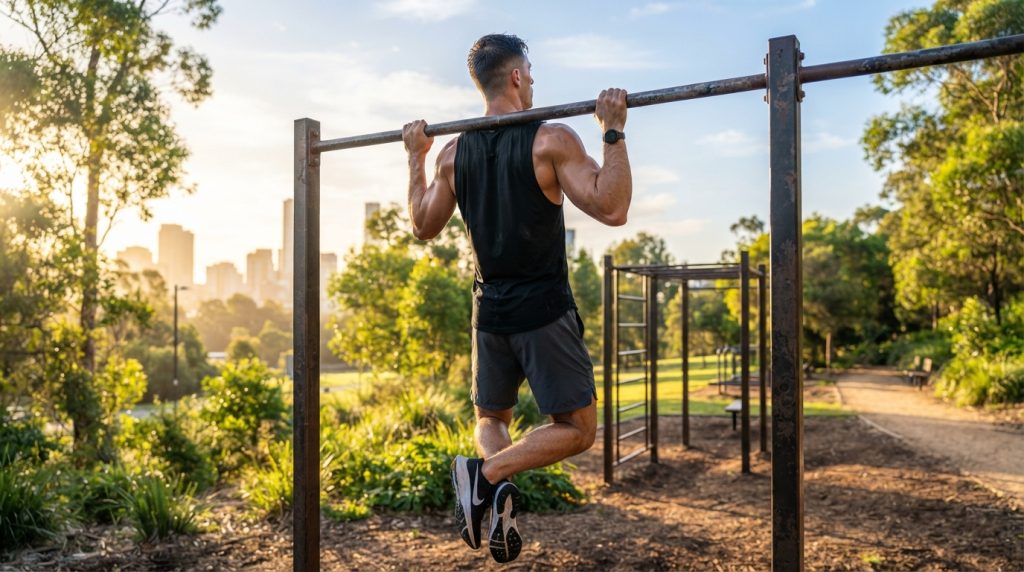
A pull-up is a bodyweight strength exercise where I hang from a horizontal bar with my palms facing away from my body and pull myself upward until my chin rises above the bar. After reaching the top, I lower myself slowly until my arms are fully extended.
Unlike many machine exercises, pull-ups rely on my own body weight. This makes them one of the best functional exercises for developing upper-body strength.
Benefits of Pull-Up Exercise
1. Builds Upper Body Strength
Pull-ups strengthen the muscles in my back, shoulders, arms, and chest. Since multiple muscle groups work together, I can build strength more efficiently than with many isolation exercises.
2. Improves Grip Strength
Holding my body weight on the pull-up bar requires a strong grip. As I practice regularly, my hands, wrists, and forearms become stronger, which also improves performance in other exercises.
3. Develops a Strong Back
Pull-ups target the large muscles of the upper back, helping create a wider and stronger back. A strong back supports better posture and reduces the risk of muscle imbalance.
4. Enhances Posture
Many people spend long hours sitting in front of a computer. Pull-ups strengthen the muscles responsible for keeping my shoulders back and spine properly aligned, helping improve posture over time.
5. Increases Functional Fitness
Pull-ups improve my ability to perform everyday activities such as climbing, lifting, pulling, and carrying objects. Functional strength helps me move more efficiently in daily life.
6. Requires Minimal Equipment
One of the biggest advantages of pull-ups is simplicity. I only need a sturdy pull-up bar, making this exercise suitable for home workouts, parks, or gyms.
Muscles Worked During Pull-Ups
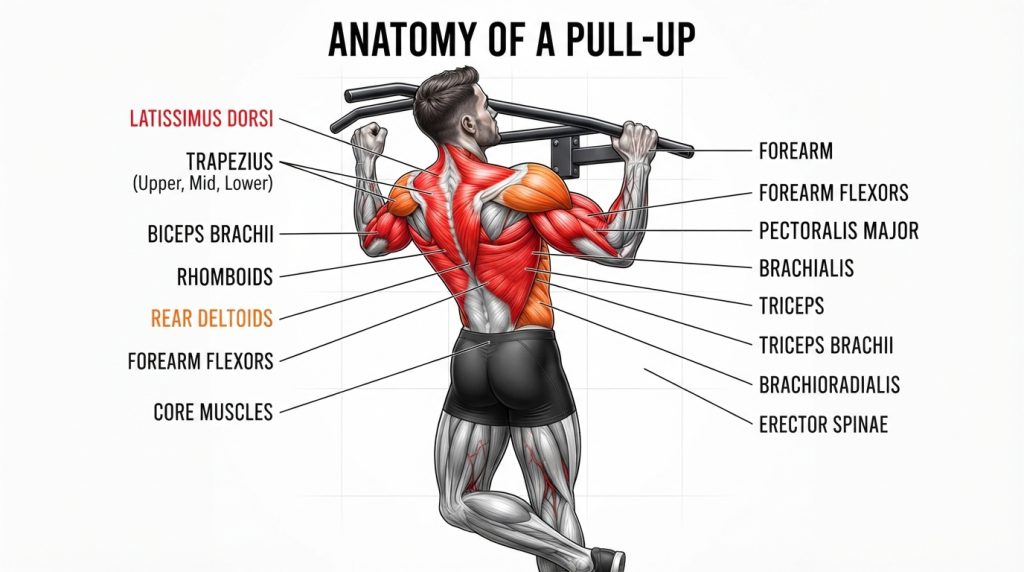
Pull-ups engage several muscles simultaneously, including:
* Latissimus dorsi (lats)
* Biceps
* Trapezius
* Rhomboids
* Rear shoulders
* Forearms
* Core muscles
Because so many muscles work together, pull-ups provide an effective full upper-body workout.
How to Perform a Pull-Up Correctly
Following the proper technique reduces the risk of injury and improves results.
Step 1: Grip the Bar
Stand beneath the pull-up bar and grasp it with an overhand grip. Keep your hands slightly wider than shoulder-width apart.
Step 2: Hang Properly
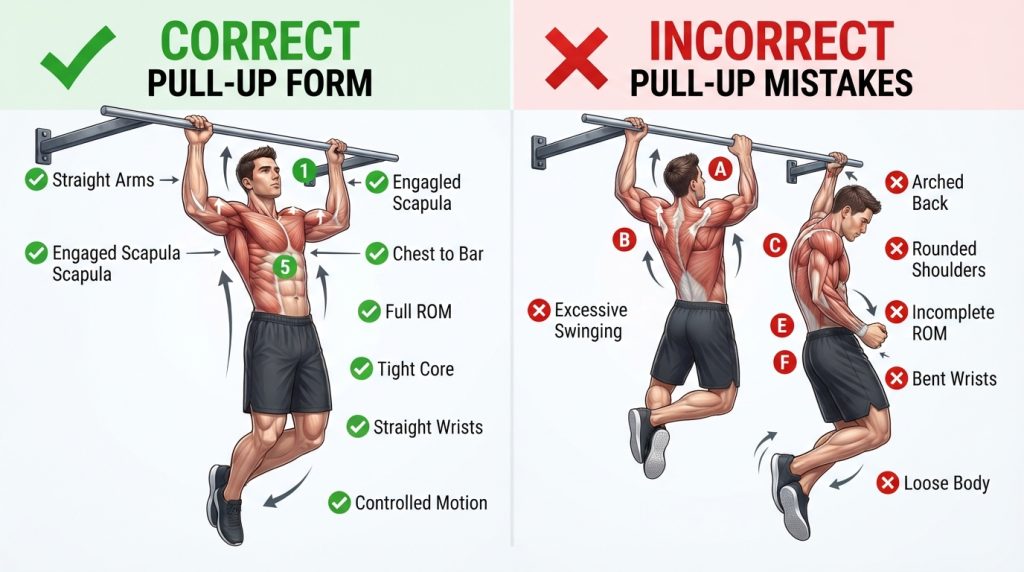
Allow your body to hang naturally with your arms fully extended. Tighten your core and avoid excessive swinging.
Step 3: Pull Yourself Up
Pull your elbows down toward your sides while lifting your chest toward the bar. Continue pulling until your chin passes above the bar.
Step 4: Lower Slowly
Lower your body in a controlled movement until your arms become fully extended again. Avoid dropping quickly.
Step 5: Repeat
Maintain smooth, controlled movements throughout every repetition.
Common Pull-Up Mistakes
Many beginners struggle because of poor technique. Avoid these common mistakes:
Swinging the Body
Using momentum makes the exercise easier but reduces muscle engagement. Focus on controlled movements instead.
Partial Range of Motion
Lowering only halfway limits muscle development. Always extend your arms fully before beginning the next repetition.
Pulling with the Arms Only
The back muscles should perform most of the work. Think about driving your elbows downward instead of simply pulling with your hands.
Looking Up Too Much
Keep your head in a neutral position to avoid unnecessary strain on your neck.
Holding Your Breath
Breathe naturally throughout the exercise. Exhale while pulling upward and inhale while lowering.
Beginner Tips for Pull-Ups
If I cannot complete a full pull-up yet, I do not get discouraged. Everyone starts somewhere.
Helpful beginner exercises include:
* Dead hangs
* Assisted pull-ups using resistance bands
* Negative pull-ups
* Australian rows
* Lat pulldowns
* Scapular pull-ups
These exercises strengthen the muscles needed for a full pull-up.
Pull-Up Variations
Once I master the basic pull-up, I can try different variations to continue improving.
Chin-Up
The palms face toward the body. This variation places greater emphasis on the biceps.
Wide-Grip Pull-Up
A wider grip increases the challenge for the upper back and lat muscles.
Close-Grip Pull-Up
A narrower grip shifts more work toward the arms while still strengthening the back.
Neutral-Grip Pull-Up
The palms face each other. Many people find this variation more comfortable for the shoulders.
Weighted Pull-Up
Advanced athletes can wear a weight belt or weighted vest to increase resistance
How Many Pull-Ups Should I Do?
The ideal number depends on my fitness level.
*Beginners:* 3 sets of 3–5 repetitions
*Intermediate:* 3–4 sets of 6–10 repetitions
*Advanced:* 4–5 sets of 10–15 repetitions or add weight for greater difficulty.
Quality always matters more than quantity.
Safety Tips
To stay safe during pull-ups, I always:
* Warm up before exercising.
* Use a secure pull-up bar.
* Perform each repetition with control.
* Stop immediately if I feel sharp pain.
* Allow my muscles enough time to recover between sessions.
Frequently Asked Questions
## Are pull-ups better than lat pulldowns?
Pull-ups generally build more functional strength because they require lifting my entire body weight. Lat pulldowns can help beginners develop the strength needed for pull-ups.
## Can beginners learn pull-ups?
Yes. Most beginners can achieve their first pull-up by practicing assisted exercises consistently and improving upper-body strength over time.
## How often should I do pull-ups?
Training pull-ups two or three times each week allows enough recovery while helping improve strength steadily.
## Do pull-ups build muscle?
Yes. Pull-ups stimulate several major upper-body muscles, making them an excellent exercise for muscle growth when combined with proper nutrition and recovery.
Conclusion
The pull-up remains one of the most effective bodyweight exercises for developing upper-body strength, improving posture, increasing grip strength, and building functional fitness. Although the exercise can feel challenging at first, consistent practice and proper technique lead to noticeable progress over time.
Instead of rushing to perform many repetitions, I focus on correct form and gradual improvement. Every successful pull-up represents increased strength, better endurance, and greater confidence. Whether I train at home, in a gym, or at an outdoor fitness park, adding pull-ups to my routine can help me build a stronger, healthier body.